
San Diego Bankruptcy Records
San Diego bankruptcy records are available through the Southern District of California Bankruptcy Court. As California's second largest city with over 1.4 million residents, San Diego sees a high volume of bankruptcy filings each year. Searching for these records involves using PACER, the federal court system's online database, or visiting the downtown courthouse in person. The court handles Chapter 7, Chapter 13, and Chapter 11 cases for residents throughout the city. Whether you need to verify a past filing, check on a pending case, or research public records for legal or business purposes, all San Diego bankruptcy documents are accessible to the public through established court channels.
San Diego Quick Facts
San Diego Bankruptcy Court Location
The Southern District of California Bankruptcy Court serves all San Diego residents. It is located at 325 West F Street, San Diego, CA 92101. The building sits in the heart of downtown, close to the Santa Fe Depot and easy to reach by trolley or bus. Parking garages are nearby, though spaces fill up fast on court days.
Call (619) 557-5620 to reach the clerk's office. Staff answer questions about San Diego bankruptcy filings, case status, and general procedures. They are available Monday through Friday, 9 AM to 4 PM. Walk-in visits work well for record searches. You can use public terminals at no cost to look up cases and view docket entries.
The Southern District also handles Imperial County. It is the smallest of California's four bankruptcy districts by geography. But San Diego's large population means the court processes thousands of cases each year. The single courthouse location keeps all records in one place, which makes searching simpler than in districts with multiple courthouses spread across a wide area.
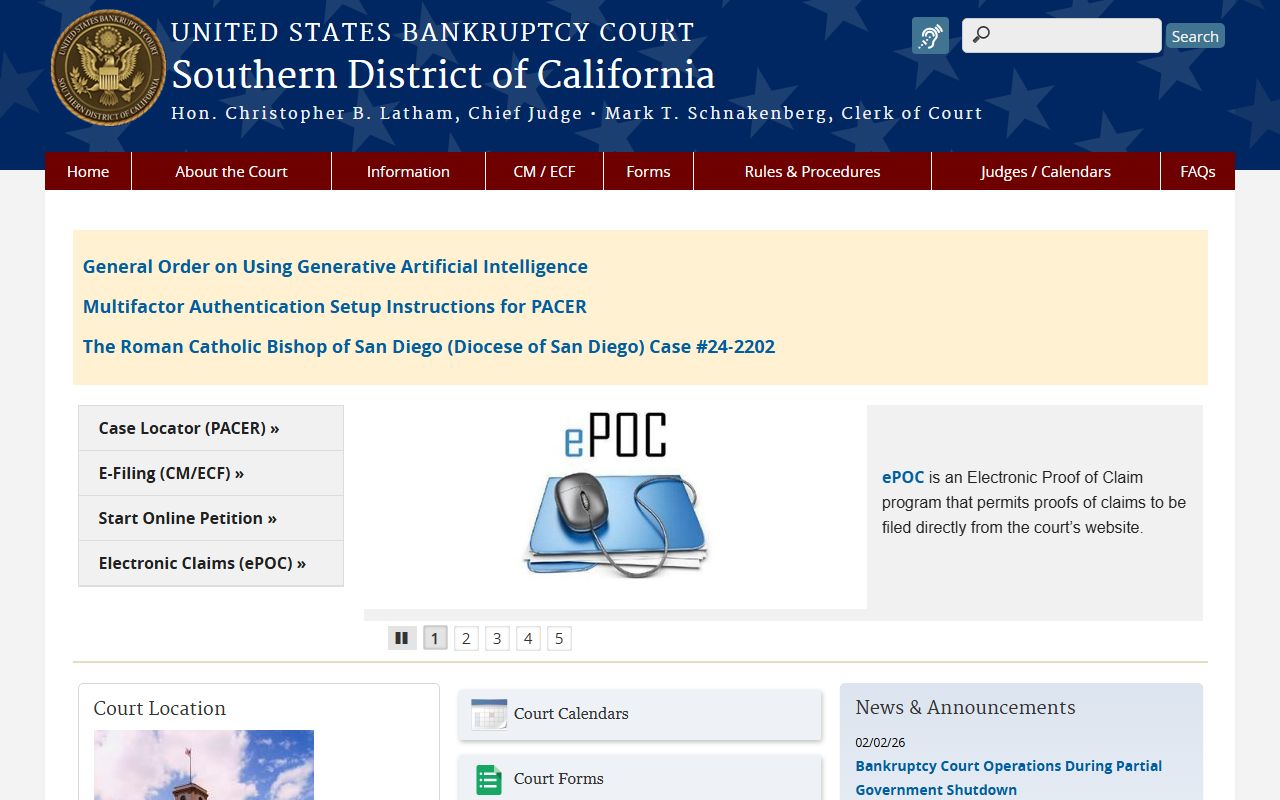
The court website provides local forms, filing guides, and fee schedules for San Diego filers.
Search San Diego Bankruptcy Records Online
PACER is the primary tool for online searches. It stands for Public Access to Court Electronic Records. The system works around the clock. You can search from any device with internet access. Registration is free at pacer.uscourts.gov.
The fee is 10 cents per page. Most documents cost less than $3 total due to the per-document cap. Users with quarterly charges under $30 pay nothing at all. This makes PACER free for people who only do occasional searches. Create an account, pick the Southern District of California, and type in a name or case number. Results show every matching San Diego bankruptcy case in the system.
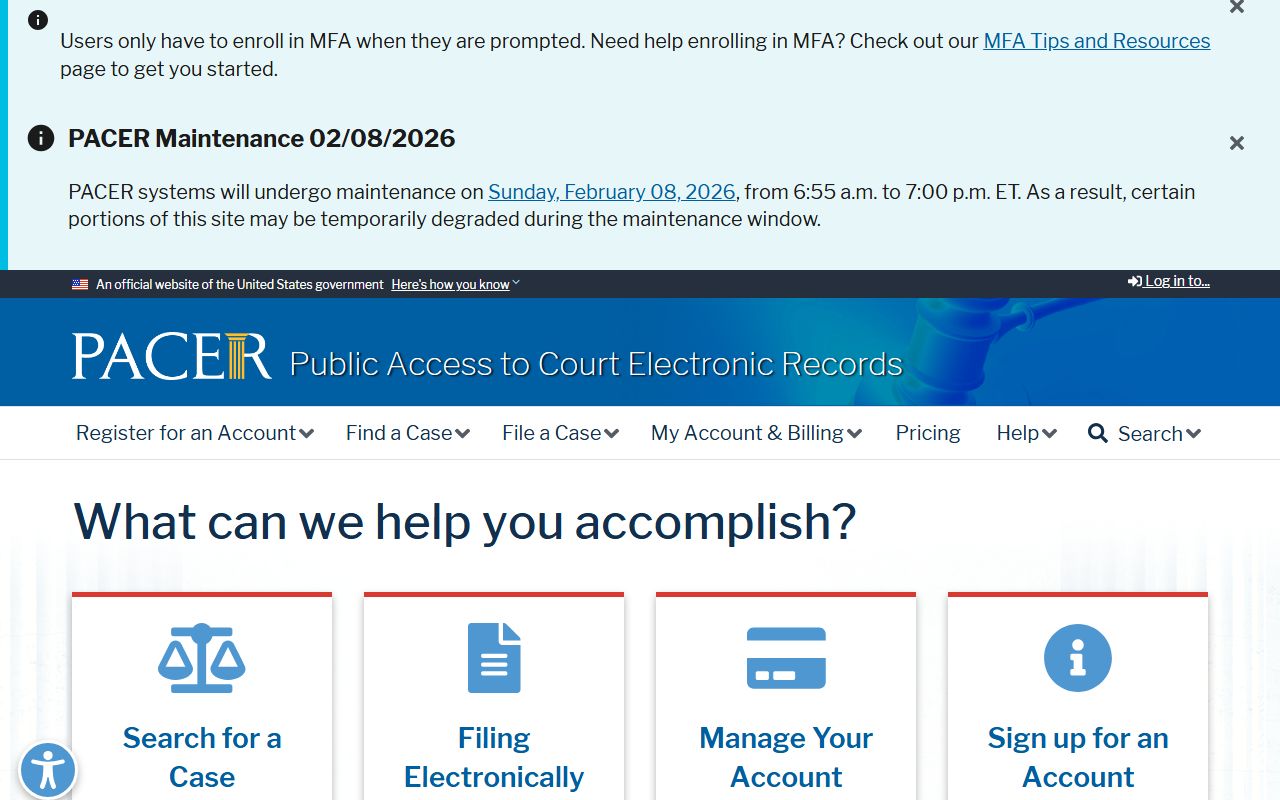
Each case listing shows the chapter type, filing date, and current status. Click through to see the full docket. You can download petitions, schedules, and court orders. The records reveal assets, debts, creditor lists, and discharge dates. All of this is public information for any San Diego bankruptcy filing.
The PACER Case Locator helps when you are not sure which court has a case. It searches all federal courts at once. Enter a name and see results nationwide. This catches cases filed before someone moved to San Diego or after they left.
Free Ways to Find Bankruptcy Filings
Not everyone wants to pay for record searches. Free options exist for San Diego bankruptcy records.
The Voice Case Information System is available by phone. Call (866) 222-8029 any time, day or night. The automated system lets you search by case number, party name, or Social Security Number. It reads back basic case details including the filing date, chapter, and whether the case is open or closed. This works well for quick checks on San Diego filings.
Visit the courthouse for free terminal access. The clerk's office at 325 West F Street has public computers. You can search and view cases without charge. Staff can help you navigate the system if you get stuck. The only cost is for printed copies, which run a few cents per page. Many people researching San Diego bankruptcy records prefer this method because it costs nothing to look at the information.
Fee waivers exist for certain users. Low-income individuals, people representing themselves in court, nonprofits, and academic researchers can apply. Contact the court clerk to ask about eligibility. If approved, you get full PACER access without any charges for searching San Diego or other district records.
Note: VCIS cannot pull up document text, only basic case information.
Filing Bankruptcy in San Diego
San Diego residents file bankruptcy at the downtown courthouse. You submit federal forms that list your income, expenses, assets, and debts. The court assigns a case number and trustee. From that point forward, everything you file becomes a public record.
Chapter 7 is the most common type. It involves liquidating assets to pay creditors. But California exemptions protect most property, so typical filers keep everything. The cost to file is $338. Cases move fast, usually finishing in three to four months. About 78% of California bankruptcies use Chapter 7.
Chapter 13 lets you keep property while repaying debts over time. Monthly payments go to a trustee for three to five years. The filing fee is $313. This option works for San Diego residents who fell behind on house or car payments but have regular income to catch up. The records show payment plans, monthly reports, and completion status.
Chapter 11 covers business reorganizations. The filing fee is $1,738. These cases are complex and create large record files with many motions, objections, and court orders. San Diego businesses in the restaurant, real estate, and tech sectors sometimes use Chapter 11 to restructure debts while staying open.
Credit counseling is required before filing. A second course on financial management is required to receive a discharge. The U.S. Trustee Program lists approved providers. Without both courses, the court will not process your San Diego bankruptcy case.
San Diego Bankruptcy Forms
All bankruptcy forms are federal. The same documents used in San Diego work in any state. Get them from uscourts.gov. The site offers fillable PDFs.
The voluntary petition starts every case. Schedule A lists real property. Schedule B covers personal property like cars and bank accounts. Schedule D shows secured debts. Schedule E/F lists unsecured debts. Schedule I reports income. Schedule J details expenses. The Statement of Financial Affairs asks about your financial history over the past few years. Each completed form becomes part of the San Diego bankruptcy record.
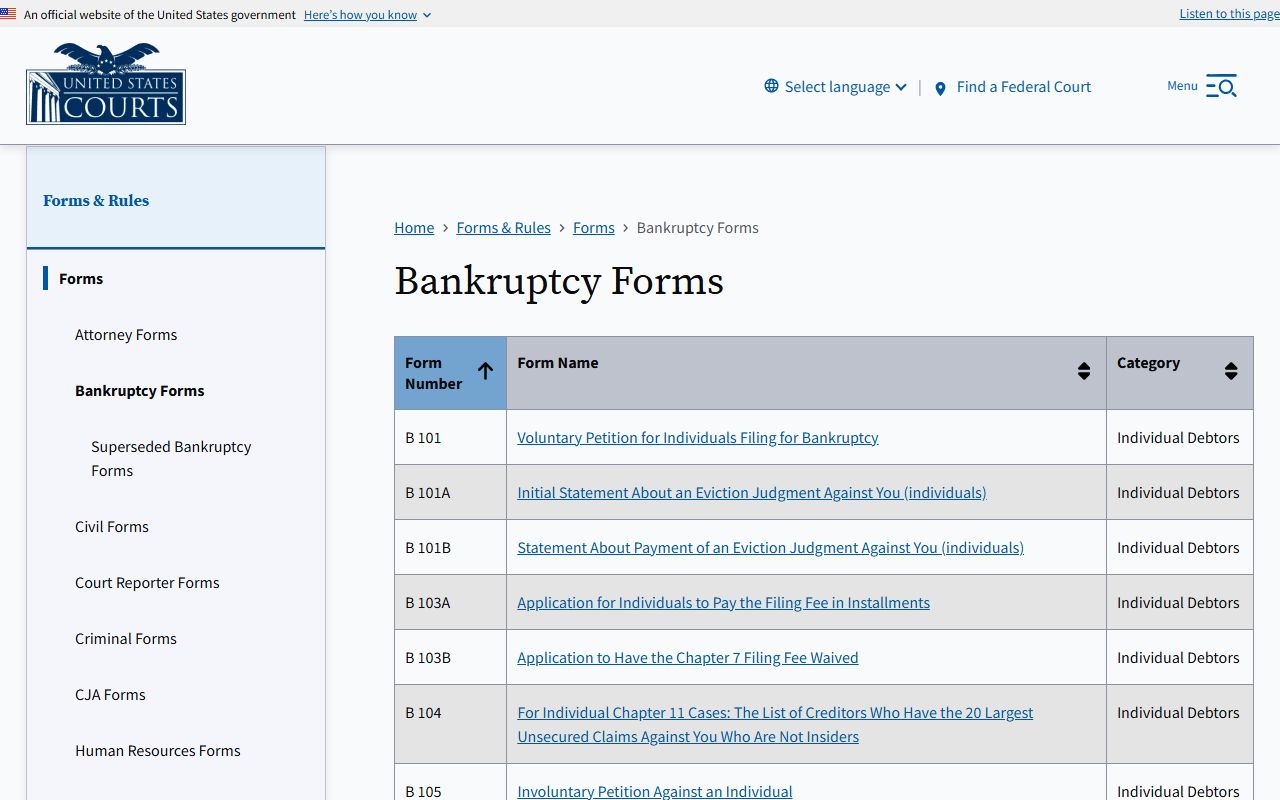
The means test determines Chapter 7 eligibility. It compares your income to the California median. As of late 2025, a single person can earn up to $77,221 annually and still qualify. Higher income may require Chapter 13 instead. Means test results appear in the case file.
California Exemptions for San Diego Filers
California offers two exemption systems. You pick one or the other. Mixing is not allowed. The choice affects what property you keep.
System 1 protects home equity up to $722,507. This is one of the highest homestead exemptions in the country. San Diego has expensive real estate, so many homeowners need this protection. The exemption also covers vehicles up to $8,625, tools of trade up to $10,950, and unlimited retirement accounts. System 1 works best for people who own homes with significant equity.
System 2 has a smaller homestead of $36,750 but includes a wildcard exemption worth up to $38,700. You can apply the wildcard to anything. Bank accounts, cars, personal items, even cash. Many San Diego renters choose System 2 because the wildcard protects their most important assets. Your exemption choice shows up in the bankruptcy records.
Using California exemptions requires living in the state for at least two years. Newer residents may need to use their prior state's exemptions or federal exemptions. The 730-day rule trips up people who recently relocated to San Diego. Talk to a lawyer if you moved here within the past two years.
Legal Help in San Diego
Bankruptcy attorneys handle most cases. But you can file on your own. The court calls self-represented filers "pro se." Either way works for simple Chapter 7 cases.
The San Diego County Bar Association offers a lawyer referral service. You pay a small fee for a short consultation with a bankruptcy attorney. This helps you decide if you need full representation or can handle things yourself. Legal Aid Society of San Diego provides free help to low-income residents for certain legal matters.
The court website has self-help materials. You can find local rules, filing checklists, and procedure guides online. The clerk's office answers procedural questions but cannot give legal advice. For many San Diego residents, these free resources are enough to navigate a straightforward bankruptcy filing.
Before hiring any attorney, check their license status with the California State Bar. The website shows disciplinary history and current standing. This protects you from unlicensed practitioners who sometimes target people in financial distress.
Electronic Filing for San Diego Cases
Attorneys must file electronically through CM/ECF. This is the court's Case Management/Electronic Case Files system. Registration requires a bar number. Once approved, lawyers submit all documents online. The system timestamps each filing and adds it to the case docket instantly.
Pro se filers can submit paper documents at the clerk's window. The staff scan and upload them to the electronic record. This means all San Diego bankruptcy records end up in the same digital system regardless of how they were originally filed. You can search them all through PACER.
Note: CM/ECF login credentials are separate from your PACER account.
San Diego County Bankruptcy Information
San Diego is part of San Diego County, which falls under the Southern District of California. The county has over 3.3 million residents across 18 incorporated cities and many unincorporated areas. All county residents file bankruptcy through the same downtown courthouse.
Nearby Cities in the Southern District
These San Diego County cities also file through the Southern District of California Bankruptcy Court.