
Search California Bankruptcy Records
California bankruptcy records are public court files kept by four federal district courts. The state leads the nation in total filings, with over 47,000 cases filed in 2024 alone. You can search these records through PACER, the federal court system's online portal. Each of California's 58 counties falls under one of four bankruptcy court districts. This guide shows you how to find and access bankruptcy case files, dockets, and court documents across the state. Whether you need records for legal research, background checks, or personal use, multiple search options are open to you.
California Bankruptcy Facts
California Bankruptcy Court Districts
California splits its bankruptcy cases among four federal court districts. The Central District handles Los Angeles, Orange, and five other counties. It sees the most filings of any court in the nation. The Eastern District spans 34 counties across the Central Valley and Sierra Nevada region. The Northern District serves the Bay Area and north coast. The Southern District covers just San Diego and Imperial counties.
Each district runs its own clerk's office and courthouse locations. Some districts have multiple courthouses to serve a wide area. You file in the district where you live. Records stay with that court. If you need to search for a case, you must know which district handled it. The county where a person lived at the time of filing tells you the right district to check for California bankruptcy records.
The Central District of California Bankruptcy Court processes more cases than any other in the country. Its main office sits in Los Angeles at 255 E. Temple Street. Other locations include Riverside, Santa Ana, Woodland Hills, and Santa Barbara. Call (213) 894-3118 for the main Los Angeles office.
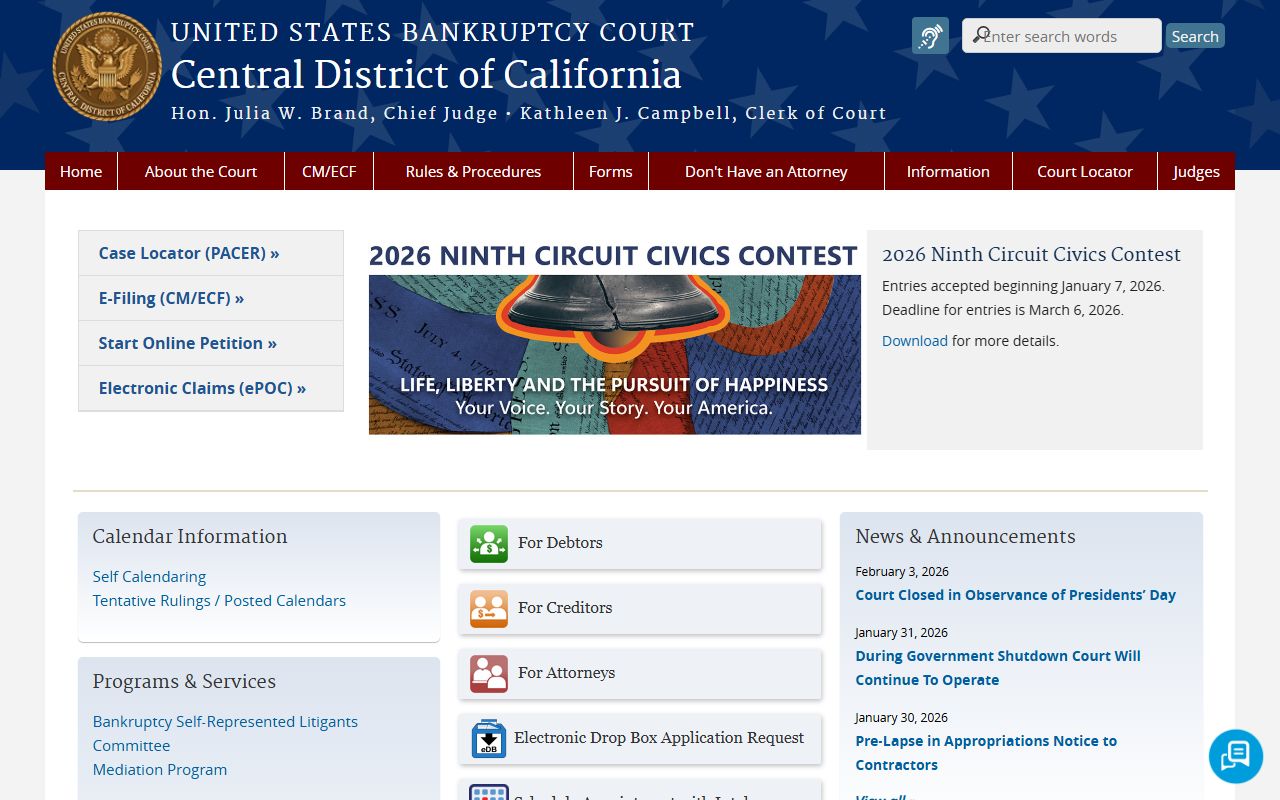
This court's website shows local rules, forms, and case lookup tools for the Central District.
The Eastern District of California Bankruptcy Court covers the most land area with 34 counties. Offices are in Sacramento, Fresno, and Modesto. The Sacramento headquarters is at 501 I Street. Phone (916) 930-4400 to reach the clerk.
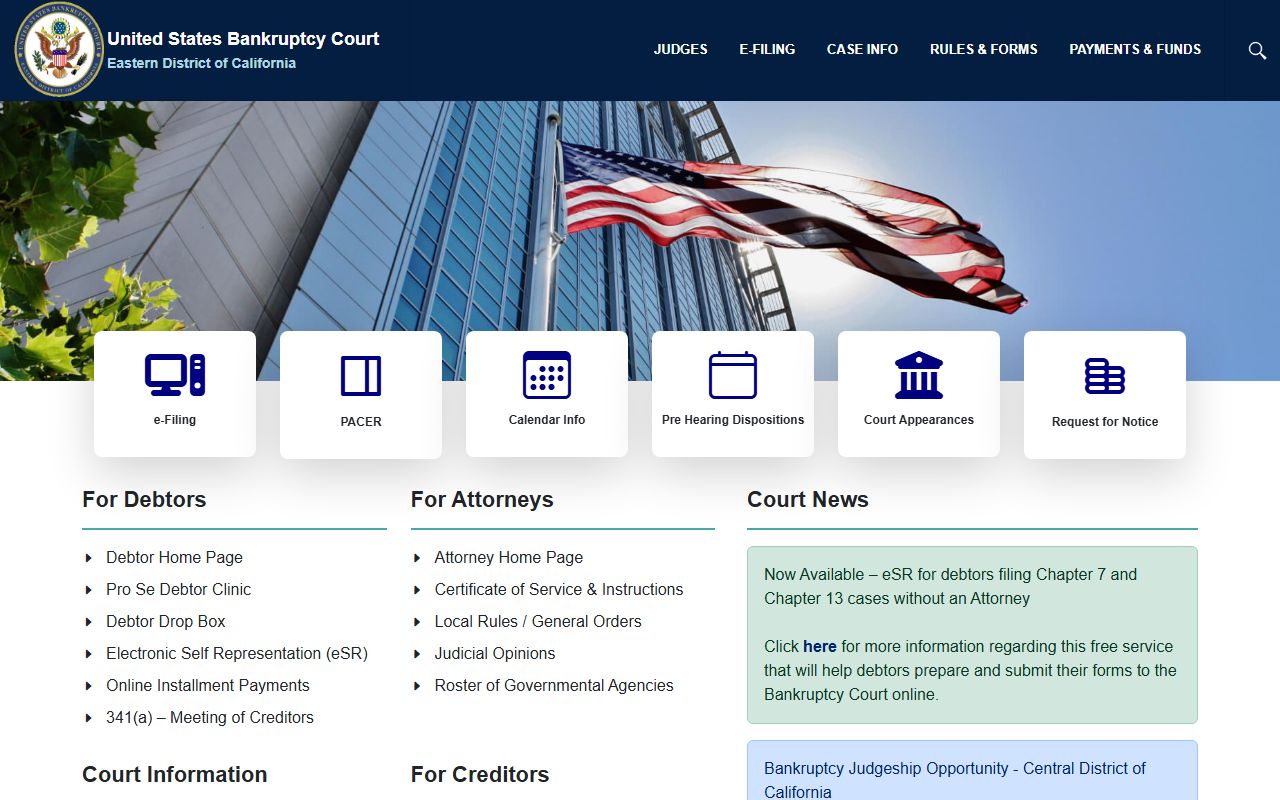
Farmers and rural business owners often file through this court's Fresno division.
Northern and Southern California Bankruptcy Courts
The Northern District of California Bankruptcy Court serves 15 counties in the Bay Area and along the north coast. Offices are in San Francisco, Oakland, San Jose, and Santa Rosa. The main courthouse is at 235 Pine Street in San Francisco. This district reports the highest median debtor incomes in the nation. Filers here tend to have more assets to protect.
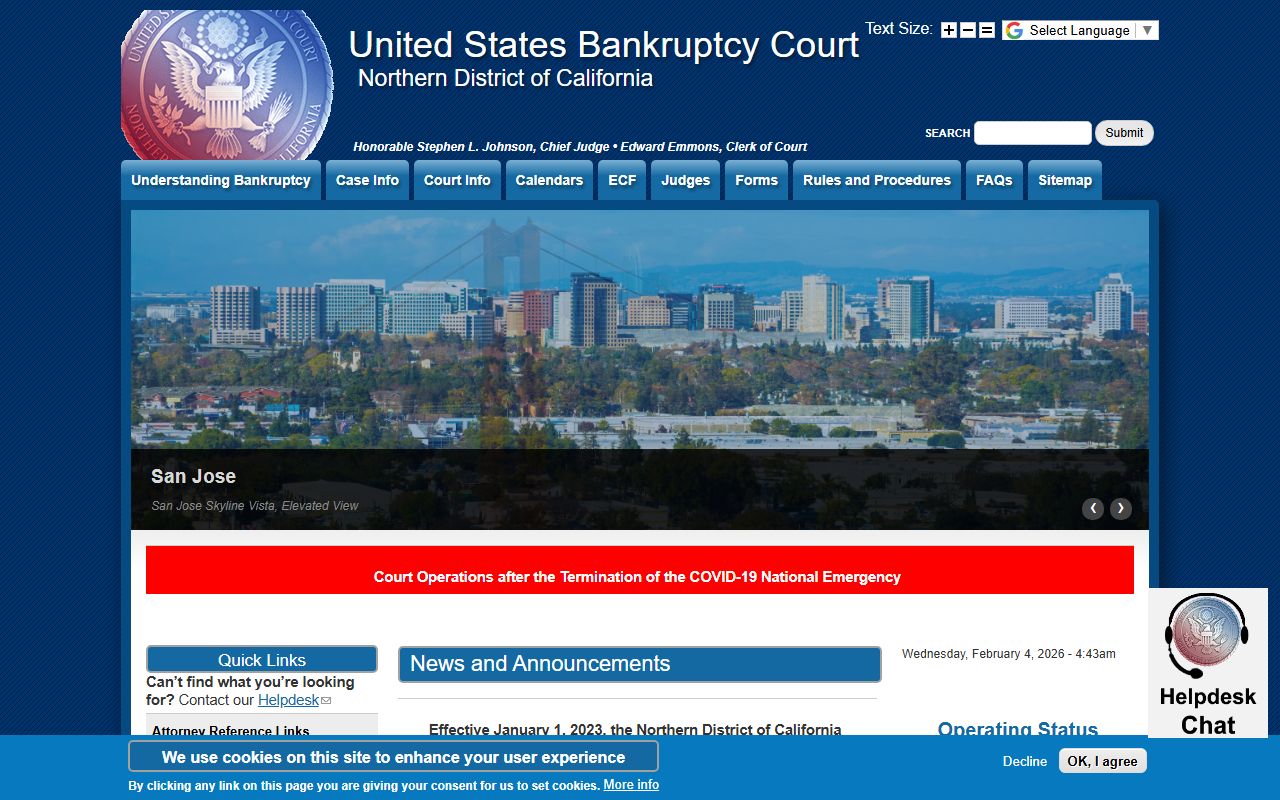
The Southern District of California Bankruptcy Court is the smallest. It handles only San Diego and Imperial counties from one courthouse at 325 West F Street in San Diego. Despite its small size, this court still processes thousands of California bankruptcy cases each year. Call (619) 557-5620 for the clerk's office.
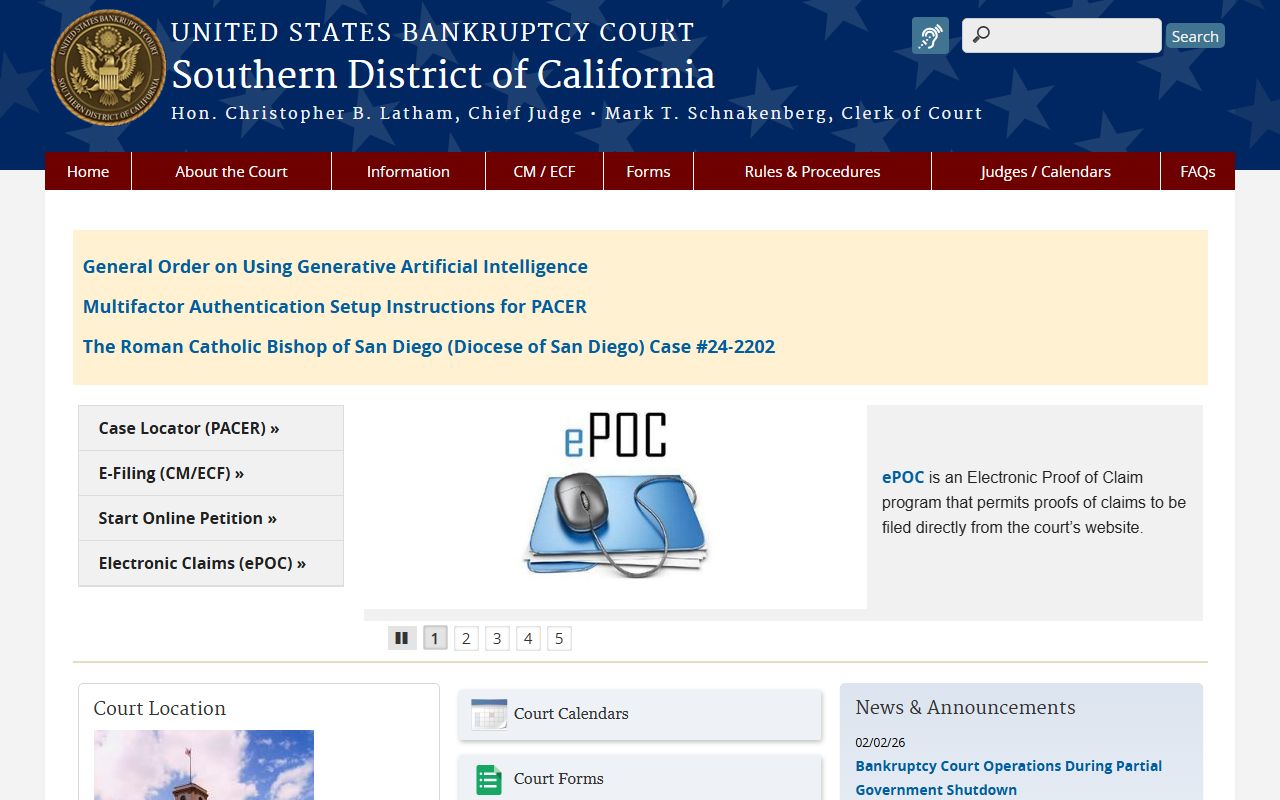
Note: Each district has its own local rules and forms, so check the right court website before filing or requesting records.
Search California Bankruptcy Records on PACER
PACER stands for Public Access to Court Electronic Records. It is the main way to search federal court records online. This includes all bankruptcy cases filed in California. The system holds over one billion documents from courts across the country. You can search from home at any time.
Registration is free at pacer.uscourts.gov. Once you have an account, you can search any federal court. The fee is 10 cents per page. A cap of $3.00 per document keeps costs down. Most people pay nothing at all. Users with less than $30 in charges per quarter get those fees waived. This makes PACER free for light users searching California bankruptcy records.
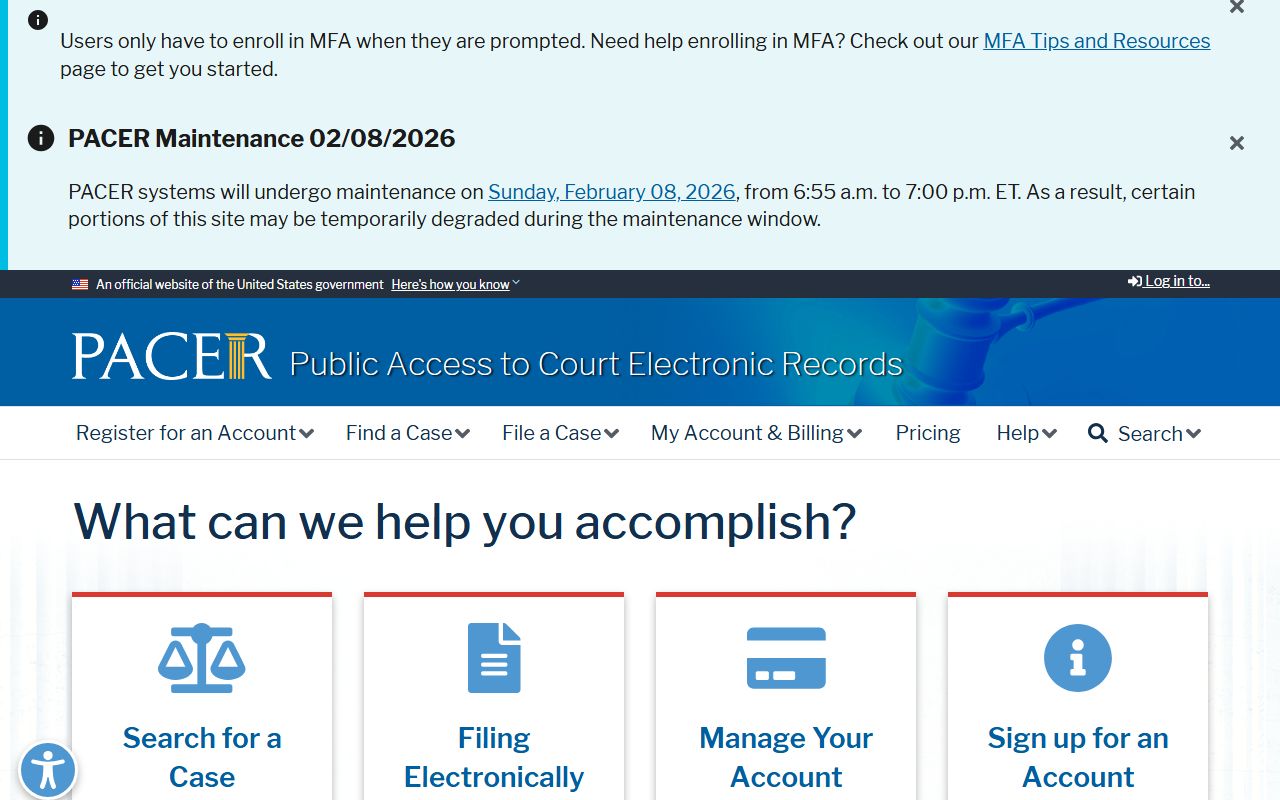
You can sign up for a PACER account at the registration page. The process takes a few minutes. You will need to verify your identity. After that, you can search any California bankruptcy court right away.
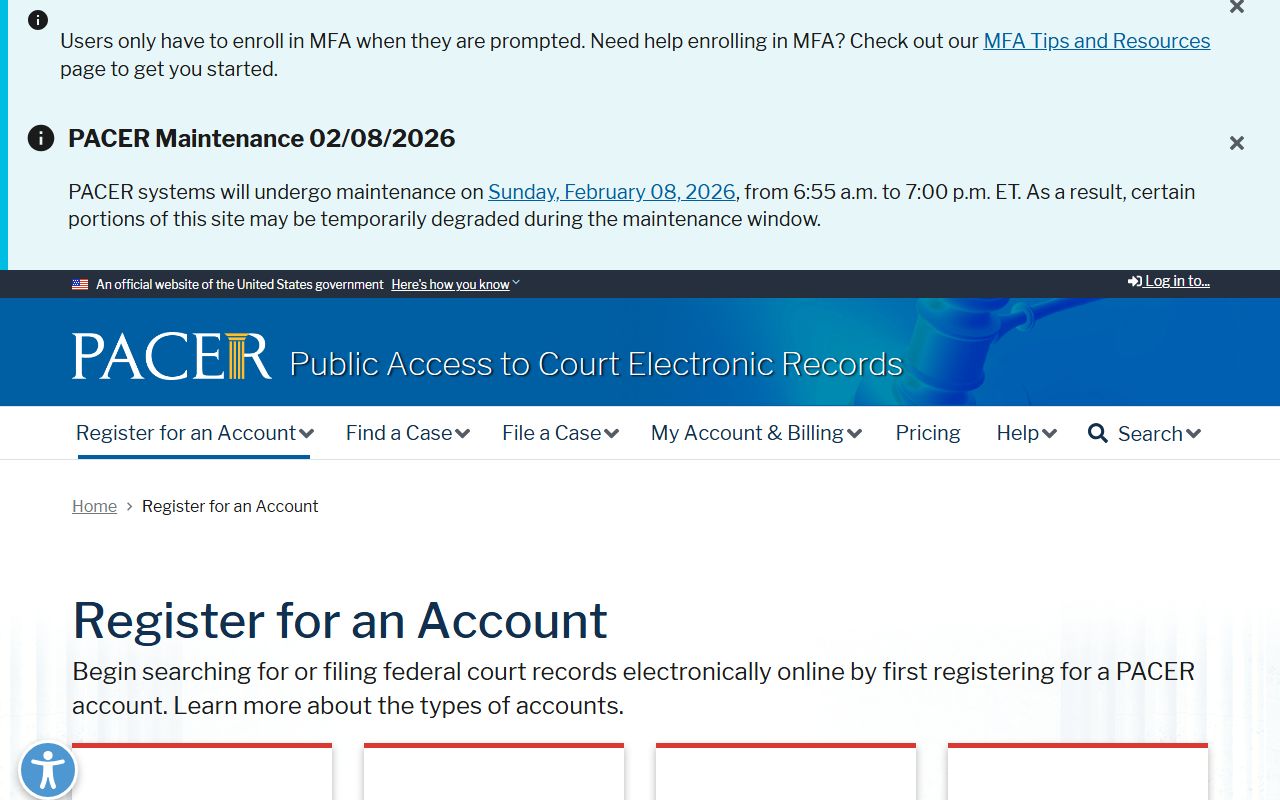
The PACER Case Locator lets you search all federal courts at once. This is useful when you do not know which district handled a case. Enter a name or case number and see results from every court. The system will show you which district in California has the records you need.
Free Ways to Find California Bankruptcy Records
Not all searches cost money. Several free options exist for finding bankruptcy records in California.
The Voice Case Information System, called VCIS, gives phone access 24 hours a day, 7 days a week. Call (866) 222-8029 from any phone. You can search by case number, party name, or Social Security Number. The system reads back basic case info like the filing date, chapter type, and case status. This works well for quick checks on California bankruptcy cases.
Each bankruptcy court has free public terminals. Walk into any clerk's office during business hours. Most are open from 9 AM to 4 PM, Monday through Friday. Staff can help you find records and use the terminals. You can view full case files and dockets at no charge. Printing may cost a small fee.
Some users qualify for full PACER fee waivers. These include people with low income, those representing themselves in court, nonprofits, and academic researchers. Contact the court clerk to ask about a fee waiver for your California bankruptcy record search.
California Bankruptcy Court Electronic Filing
CM/ECF stands for Case Management/Electronic Case Files. Lawyers and parties use this system to file documents with the court. Each California bankruptcy district runs its own CM/ECF site. These systems hold all case documents in digital form.
The Central District CM/ECF handles filings for the busiest court in the nation. Attorneys must register to file electronically here.
The Eastern District CM/ECF serves the 34-county region from Sacramento to Fresno.
The Northern District CM/ECF covers Bay Area filings and records.
The Southern District CM/ECF manages San Diego and Imperial County cases.
Note: CM/ECF requires a separate login from PACER, but viewing documents still routes through your PACER account.
Types of Bankruptcy Cases in California
Bankruptcy filings come in several types. Each type creates different records.
Chapter 7 is the most common in California. About 78% of all filings use this chapter. It involves liquidating assets to pay debts. Most people keep all their property due to exemptions. The case ends in a few months. Records include the petition, schedules listing assets and debts, and the discharge order.
Chapter 13 lets people with regular income repay debts over three to five years. About 20% of California bankruptcy cases are Chapter 13. Records include the repayment plan, payment receipts, and completion documents. These files tend to be larger than Chapter 7 cases.
Chapter 11 covers business reorganization. Companies use this to restructure while staying open. It is complex and creates many documents. Only about 1.5% of California filings are Chapter 11 cases, but they often involve large amounts of money and lengthy court proceedings.
All case types produce searchable records in California. The petition starts every case. Schedules list all assets, debts, income, and expenses. The trustee files reports on each case. The final discharge ends most cases. You can find all these documents through PACER or at the courthouse.
Official Bankruptcy Forms and Documents
The federal courts publish official bankruptcy forms. These are the same forms used in every state, including California. You can download them all from uscourts.gov. The site has fillable PDFs for each form type.
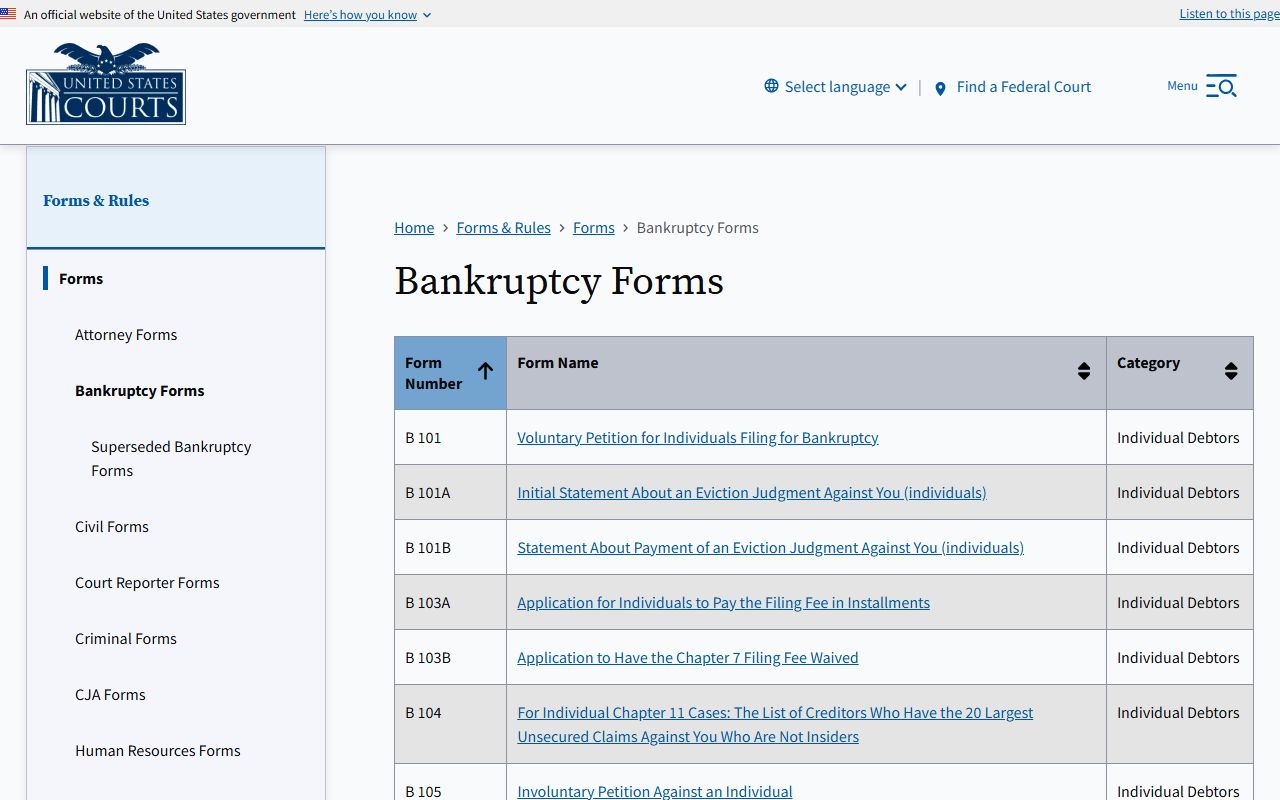
Key forms include the voluntary petition, which starts a case. Schedules A through J list property, debts, income, and expenses. The means test form determines if someone qualifies for Chapter 7. Statement of Financial Affairs covers financial history. Each form becomes part of the court record in California bankruptcy cases.
Understanding these forms helps when you search records. The schedule letters tell you what info each document holds. Schedule D lists secured debts like mortgages. Schedule E/F covers unsecured debts like credit cards. Schedule I shows income. Schedule J lists expenses. These details appear in every California bankruptcy record.
California Bankruptcy Exemptions
California gives filers a choice between two exemption systems. This is unique among all states. You pick System 1 or System 2. You cannot mix them. The choice affects what property you keep.
System 1 works best for homeowners. It protects up to $722,507 in home equity as of 2025. This is one of the highest homestead exemptions in the country. The exact amount depends on your county's median home prices. System 1 also covers vehicles up to $8,625, tools of trade up to $10,950, and retirement accounts with no limit.
System 2 suits renters and those with little home equity. It has a smaller homestead of $36,750. But it adds a wildcard exemption worth up to $38,700. You can apply this to any property. That flexibility helps protect cars, bank accounts, or other assets in California bankruptcy cases.
The exemption choice appears in the bankruptcy records. Filers must declare which system they use on their schedules. This affects what creditors can claim. Lawyers often analyze prior cases to see which system people in similar situations chose. California bankruptcy records show these patterns clearly.
Who Searches California Bankruptcy Records
Many people need to search bankruptcy records. Each has different reasons.
Employers sometimes check applicants for certain jobs. Financial and government positions often require background screening. A past bankruptcy is not always a problem, but employers want to know. Landlords may search before renting property. They look at financial history to judge if a tenant can pay rent. Creditors search to see if someone already filed. A pending bankruptcy stops collection efforts.
Lawyers use these records for research. They study similar cases to plan strategy. Real estate professionals check for liens and past filings. Journalists investigate business dealings. Researchers study economic trends. Private citizens search their own records or check public filings for family law matters. All of these searches use the same California bankruptcy court databases.
Browse California Bankruptcy Records by County
Each of California's 58 counties falls under one of four federal bankruptcy districts. Pick a county below to find local court info and resources for bankruptcy records in that area.
Bankruptcy Records in Major California Cities
Residents of major cities file for bankruptcy at their district court. Pick a city below to learn about bankruptcy records in that area.