
Escondido Bankruptcy Case Search
Escondido bankruptcy records are held by the Southern District of California Bankruptcy Court in San Diego. This inland San Diego County city has roughly 149,000 residents and sits about 30 miles north of downtown San Diego. When Escondido residents need debt relief, they file bankruptcy petitions with the federal court. These cases create public records that list assets, debts, income, and expenses. Creditors, payment plans, and discharge status all appear in the file. You can search for Escondido bankruptcy cases using PACER online or by visiting the courthouse clerk's office. This guide walks through the process for accessing these court records.
Escondido Quick Facts
Escondido Bankruptcy Court Details
Escondido does not have its own bankruptcy court. All cases go to the Southern District of California Bankruptcy Court. The courthouse is at 325 West F Street in downtown San Diego. From Escondido, the drive takes roughly 35 to 45 minutes depending on freeway traffic.
The clerk's office phone number is (619) 557-5620. Call with questions about Escondido bankruptcy filings, document requests, or court procedures. Staff are available from 9 AM to 4 PM, Monday through Friday.
Southern District jurisdiction includes all of San Diego County plus Imperial County to the east. This means every Escondido resident files at the same courthouse as everyone else in the county. The single location simplifies record searches because you always know where the files are.
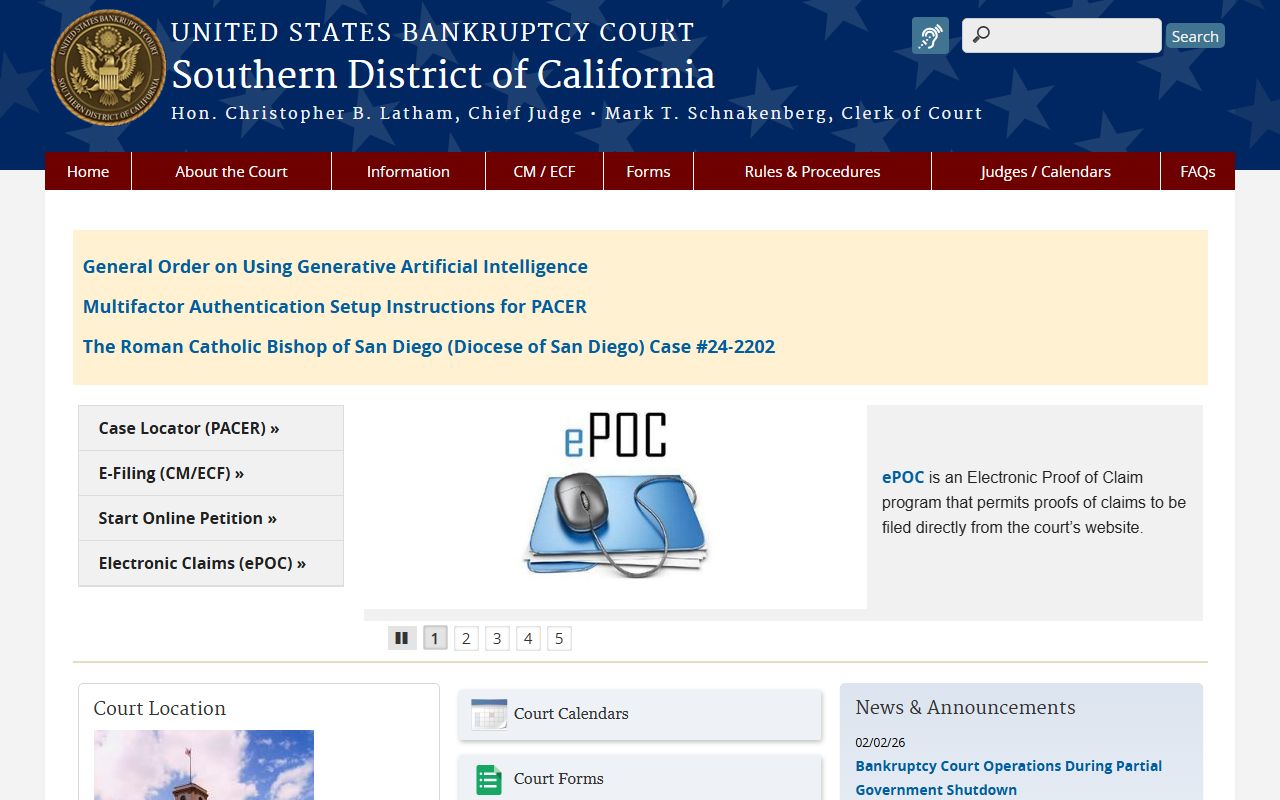
Local forms and filing rules are posted on the court website.
Search Escondido Bankruptcy Records Online
PACER gives you remote access to Escondido bankruptcy cases. It works 24 hours a day from any computer or phone with internet.
Register for free at pacer.uscourts.gov. Once logged in, select the Southern District of California from the list. Type a name into the search field. The results show every bankruptcy case in that district matching the name. Each listing displays the case number, filing date, and chapter type. Click through to see the full docket and all filed documents.
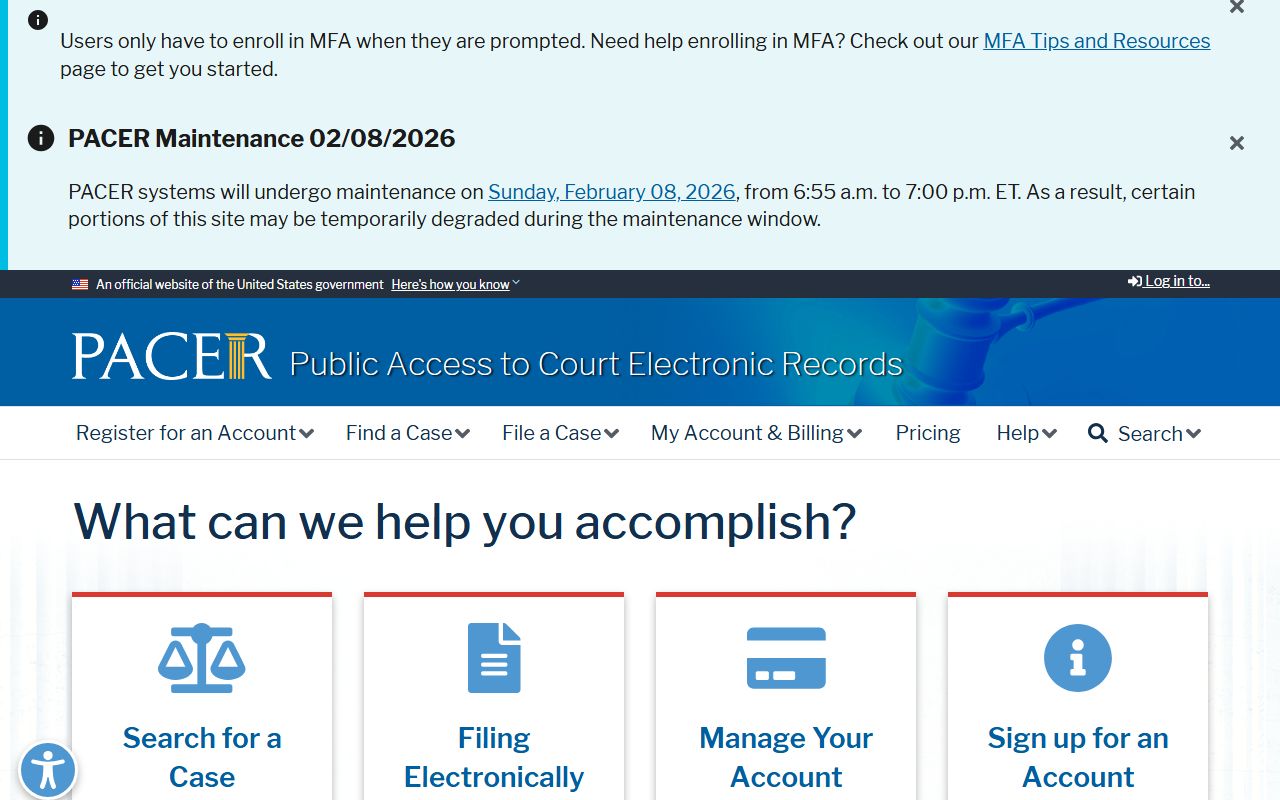
Costs are minimal. The fee is 10 cents per page. A $3 cap applies to most documents. Quarterly charges under $30 get waived entirely. Light users searching a few Escondido cases typically pay nothing.
The PACER Case Locator is useful when you do not know which district has a case. It searches all federal courts nationwide. Enter a name and the system tells you where the person filed. This catches people who filed before or after living in Escondido.
Free Ways to Access Bankruptcy Cases
Several options let Escondido residents search bankruptcy records without paying.
Call (866) 222-8029 for the Voice Case Information System. It operates 24 hours a day, every day. The automated system accepts case numbers or party names. It reads back the filing date, chapter, and current status. Quick and easy for basic information on Escondido filings.
Go to the San Diego courthouse in person. Public computer terminals provide free access to case records. View dockets and documents without charge. Staff can help navigate the system. You only pay if you want paper copies. This method works well when you need to review several Escondido bankruptcy cases in one visit.
Fee waivers are available for qualifying users. People with low income, self-represented litigants, nonprofits, and researchers can apply. The court evaluates each request. Approved applicants search PACER without incurring charges.
Note: Phone searches provide summary information only.
Filing Bankruptcy in Escondido
Escondido residents file bankruptcy at the San Diego federal courthouse. You complete standardized forms that describe your finances. The court assigns a trustee to oversee your case. Everything you submit becomes a permanent public record.
Chapter 7 liquidation is most common. The filing fee is $338. A trustee reviews your assets and exemptions. Non-exempt property gets sold to pay creditors. But California exemptions protect most property, so typical Escondido filers keep everything they own. Cases close in roughly three months.
Chapter 13 reorganization costs $313 to file. You propose a repayment plan lasting three to five years. Monthly payments go to a trustee who pays your creditors. Escondido homeowners who fell behind on mortgages often use Chapter 13 to catch up while keeping their houses. The case file tracks all plan payments.
Both chapters require credit counseling. You complete one course before filing and another before discharge. The U.S. Trustee Program maintains a list of approved providers. Skip either course and the court dismisses your case or denies discharge.
Exemptions for Escondido Bankruptcy Filers
California gives you two exemption systems. Pick one. You cannot mix from both.
System 1 protects home equity up to $722,507. Escondido real estate prices have increased substantially. Many homeowners carry enough equity to need this level of protection. System 1 also exempts vehicles up to $8,625, work tools up to $10,950, and retirement accounts without limit. Homeowners with significant equity typically choose System 1.
System 2 offers a homestead exemption of $36,750 plus a wildcard of up to $38,700. The wildcard applies to any property. Cash, cars, bank accounts, personal items. Escondido renters and people with little home equity often prefer System 2 because the wildcard protects their important assets better. Your exemption choice becomes part of the Escondido bankruptcy record.
Residency matters. You must live in California for two years to use state exemptions. Recent arrivals may need to use their prior state's exemptions instead.
Escondido Bankruptcy Documents
Bankruptcy forms are federal. They work the same in Escondido as anywhere else. Download them from uscourts.gov. Fillable PDFs are available.
The voluntary petition starts every case. Schedules A and B list property. Schedule D covers secured debts. Schedule E/F handles unsecured debts. Income and expense schedules complete the financial picture. The means test determines Chapter 7 eligibility based on income compared to state medians. All completed forms become part of your Escondido bankruptcy file.
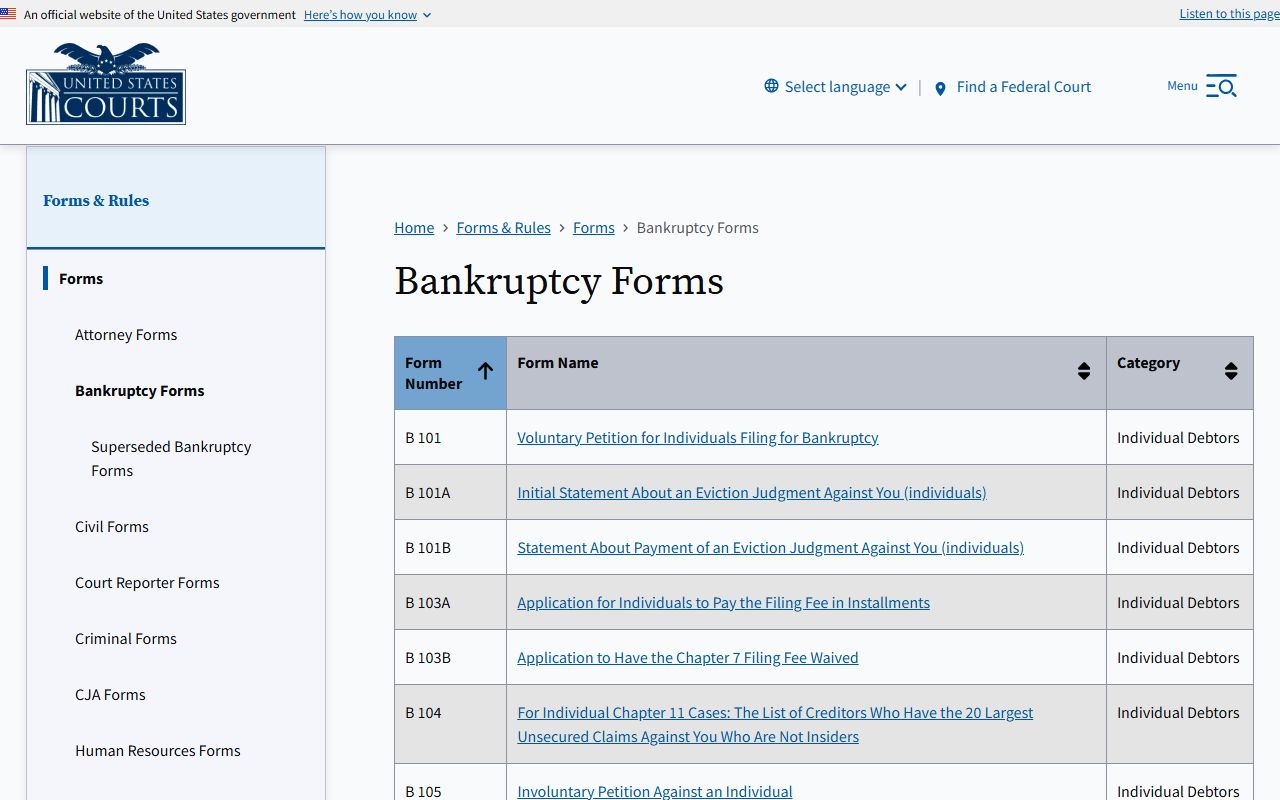
Additional documents accumulate throughout the case. Trustee reports, meeting notices, creditor objections, and motions add pages to the record. The discharge order ends most cases and appears last in the docket.
Legal Resources in Escondido
You can hire an attorney or file yourself. Simple cases sometimes work fine without a lawyer. Complex situations benefit from professional help.
The San Diego County Bar Association has a referral service. A small fee gets you a consultation with a bankruptcy lawyer. Legal Aid Society of San Diego helps low-income residents with certain legal matters, including some bankruptcy cases.
Court resources are free. The website has local rules, filing guides, and procedure manuals. The clerk's office answers procedural questions but does not give legal advice. Many Escondido residents handle straightforward Chapter 7 cases using these materials alone.
Always check a lawyer's credentials before hiring. The California State Bar website shows license status and any disciplinary history. This protects Escondido residents from unlicensed practitioners.
Note: Initial consultations often clarify whether you need full representation.
CM/ECF Electronic Filing
Attorneys use CM/ECF to file documents. This is the court's electronic case management system. Bar membership is required for registration. Lawyers submit everything online. Filings hit the docket immediately.
Pro se filers submit paper documents at the clerk's window. Staff scan and add them to the electronic record. Either way, all Escondido bankruptcy records end up in the same digital system. You search them through PACER.
Escondido and San Diego County
Escondido is part of San Diego County. All county residents file bankruptcy through the Southern District of California. The county has more than 3.3 million people. Every filing goes to the same San Diego courthouse.
Nearby Cities in the Southern District
Other San Diego County cities that file with the Southern District Bankruptcy Court.