
Access Oceanside Bankruptcy Records
Oceanside bankruptcy records are public documents filed with the Southern District of California Bankruptcy Court. This coastal city in northern San Diego County has a population of around 171,000 residents. When Oceanside residents file for bankruptcy protection, their cases go to the federal courthouse in San Diego. These filings create permanent records that include petitions, debt schedules, payment plans, and discharge orders. Anyone can search these records through PACER, the federal court electronic database. You can also visit the courthouse in person for free terminal access. This page explains the steps for finding Oceanside bankruptcy case information and court documents.
Oceanside Quick Facts
Oceanside Bankruptcy Court Information
Oceanside does not have a local bankruptcy court. Cases file with the Southern District of California Bankruptcy Court in downtown San Diego. The address is 325 West F Street, San Diego, CA 92101. Driving from Oceanside takes about 40 minutes south on Interstate 5.
Contact the clerk's office at (619) 557-5620. They handle questions about Oceanside bankruptcy filings, case status, and record requests. Hours are Monday through Friday, 9 AM to 4 PM. The staff deals with public inquiries all day long.
The Southern District covers San Diego and Imperial counties. It is the smallest district in California by geography. For Oceanside residents, this means one courthouse handles everything. No need to figure out which location has your case. All records stay in the same place.
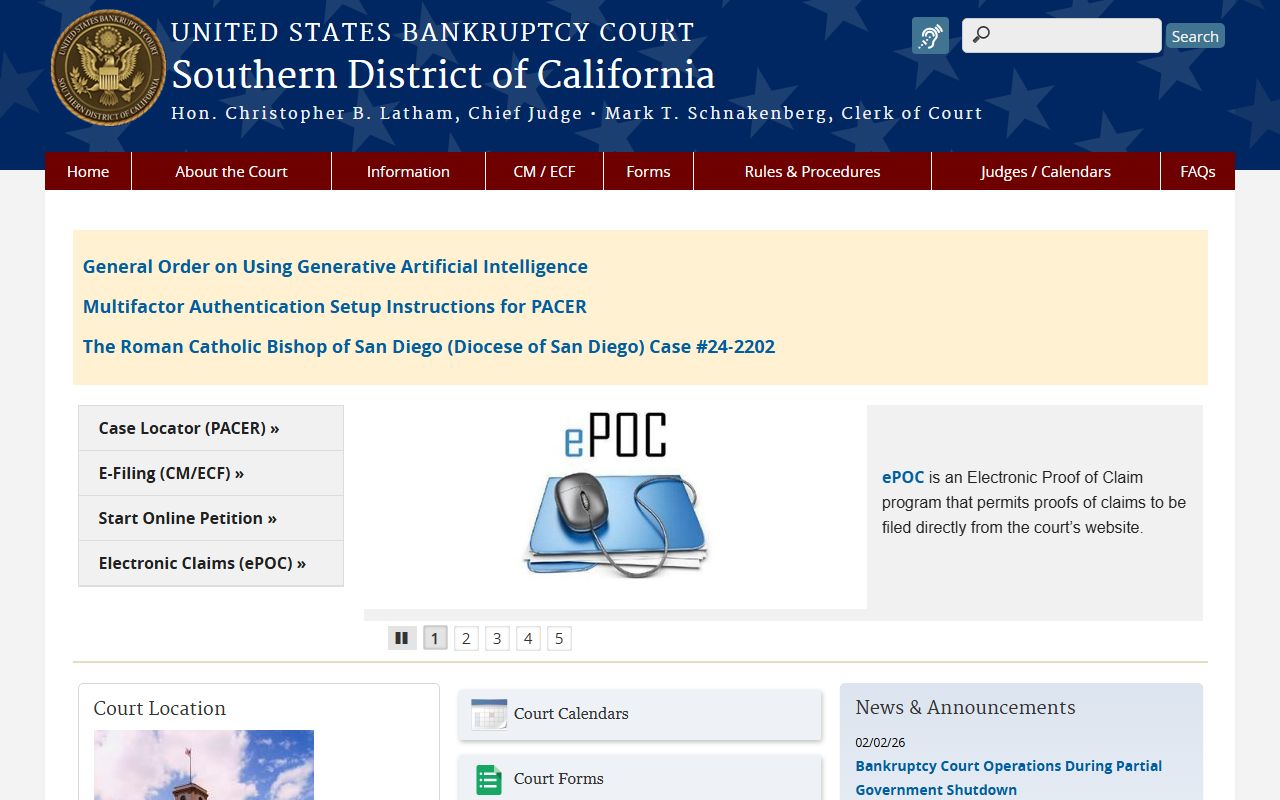
Check the court website for local rules and fee information before making the trip.
Search Oceanside Bankruptcy Records Online
PACER is the main tool for searching Oceanside bankruptcy records remotely. It operates around the clock. You do not need to visit San Diego to look up cases.
Start by creating a free account at pacer.uscourts.gov. Log in and select the Southern District of California Bankruptcy Court. Enter a name in the search box. The system returns all matching cases with filing dates, case numbers, and chapter types. Click any result to see the full docket and document list.
Fees run 10 cents per page. Most documents cap at $3 total. Casual users often pay nothing because the court waives charges under $30 per quarter. If you only search a few Oceanside cases, expect no bill at all.
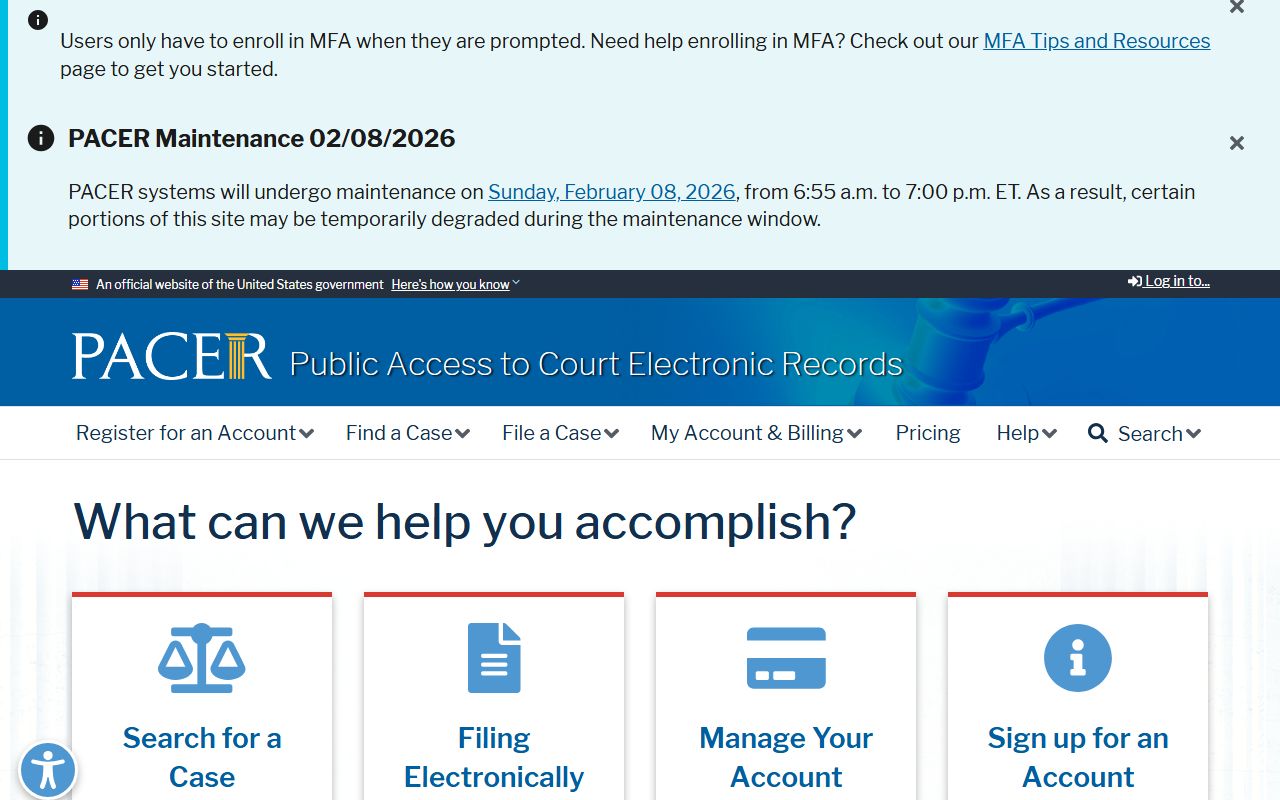
Not sure which court has a case? The PACER Case Locator searches all federal courts at once. It identifies the right district and links you directly to the records.
Free Methods to Find Bankruptcy Cases
Several free options exist for Oceanside residents searching bankruptcy records.
The Voice Case Information System provides phone access at (866) 222-8029. It runs 24 hours a day. Punch in a case number or name. The automated voice reads back filing date, chapter type, and case status. This is the fastest way to check basic information on an Oceanside filing without going online or driving to court.
Visit the San Diego courthouse for free computer access. Public terminals let you search and view complete case files. Staff can help if you get stuck. Paper copies cost a few cents each. For people who need to review many documents, an in-person visit saves money compared to downloading everything through PACER.
Fee waivers are available. Low-income users, pro se litigants, nonprofits, and academic researchers can apply. Contact the clerk to start the process. Approved applicants get full PACER access at no charge.
Note: The phone system only provides basic case data, not document contents.
Filing Bankruptcy in Oceanside
Oceanside residents file at the San Diego courthouse. You prepare federal forms that list income, expenses, property, and debts. The court assigns a case number and trustee. From filing day forward, all submissions become public record in the Oceanside bankruptcy case file.
Chapter 7 is the most popular choice. It costs $338 to file. The process liquidates non-exempt assets to pay creditors. But California exemptions protect most property. Typical Oceanside filers keep everything. Cases close in three to four months with a debt discharge.
Chapter 13 costs $313. It sets up a repayment plan lasting three to five years. Monthly payments go to a trustee who distributes funds to creditors. Oceanside homeowners behind on mortgages often use Chapter 13 to catch up while keeping their homes. Payment records and plan details appear in the case file.
Credit counseling is required twice. First, before you file. Second, before you get a discharge. The U.S. Trustee Program lists approved course providers. Missing either course blocks your case from closing.
California Exemptions for Oceanside Filers
California law offers two exemption systems. You must pick one. Mixing is not allowed.
System 1 focuses on homestead protection. It exempts home equity up to $722,507. Oceanside property values have climbed over the years. Many homeowners here carry significant equity. System 1 lets them protect it. The system also covers $8,625 in vehicle equity, $10,950 in tools of trade, and unlimited retirement accounts. Homeowners typically choose System 1.
System 2 works better for renters. The homestead exemption drops to $36,750, but the wildcard jumps to $38,700. You can apply the wildcard to anything at all. Cars, bank accounts, electronics, cash. Oceanside residents without home equity often prefer System 2 because it protects their most important personal assets. Your exemption election shows up in the bankruptcy records.
A residency rule applies. You need to live in California for two years to use state exemptions. People who moved to Oceanside recently may have to use their prior state's exemptions instead.
Oceanside Bankruptcy Forms and Documents
Federal bankruptcy forms are standard nationwide. Get them from uscourts.gov. The site has fillable PDFs.
The voluntary petition kicks off every case. It includes basic information about the debtor. Schedules come next. Schedule A lists real estate. Schedule B covers personal property. Schedule D handles secured debts like mortgages and car loans. Schedule E/F deals with unsecured debts. Income and expense schedules round out the financial picture. The means test determines Chapter 7 eligibility.
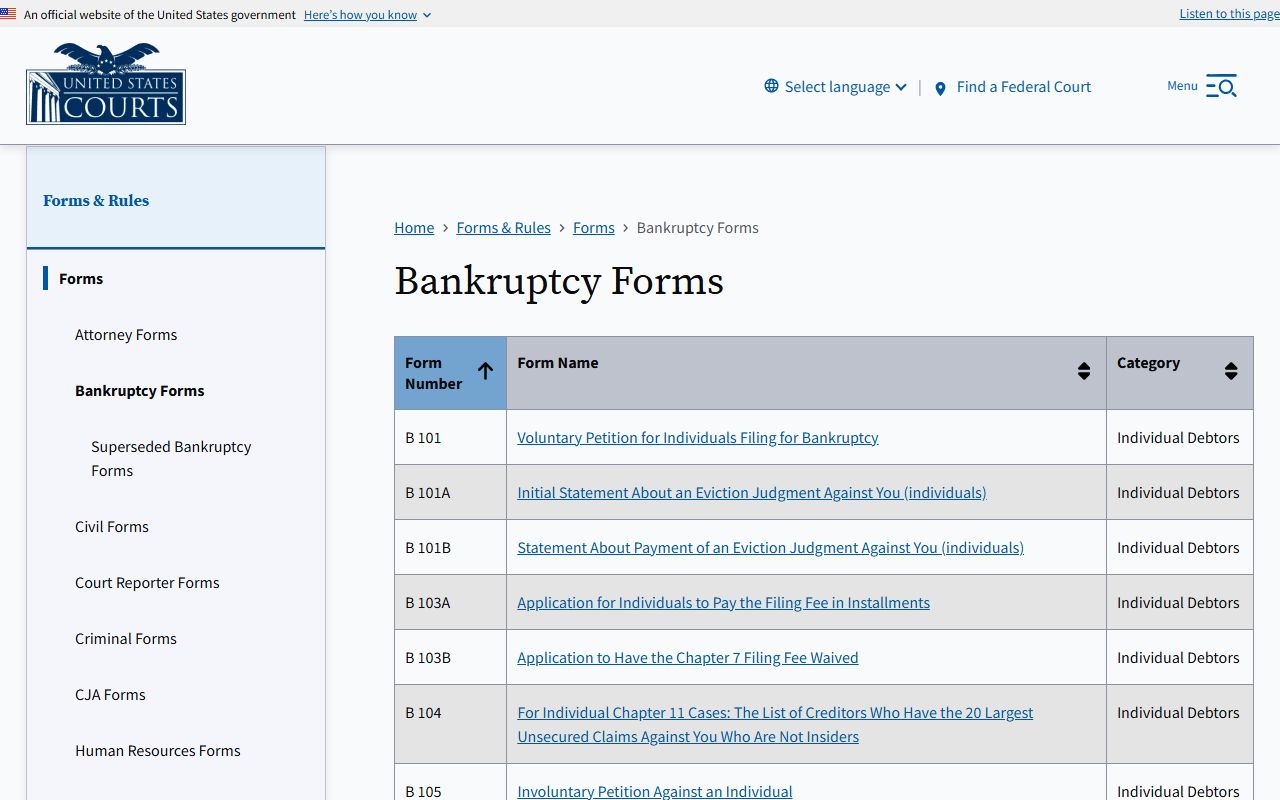
These completed forms make up the core of an Oceanside bankruptcy record. Trustee reports, meeting notices, and creditor objections add more documents over time. The discharge order ends most cases. All of it is searchable through PACER.
Legal Assistance in Oceanside
You can file bankruptcy with or without a lawyer. Simple Chapter 7 cases often work fine pro se. Complex situations benefit from attorney guidance.
The San Diego County Bar Association runs a lawyer referral program. Pay a modest fee for a short consultation with a bankruptcy attorney. Legal Aid Society of San Diego offers free help to qualifying low-income residents.
The court website has self-help resources. Local rules, forms, and filing instructions are all online. The clerk's office answers procedural questions but cannot give legal advice. Many Oceanside residents successfully handle their own cases using these materials.
Verify any attorney before hiring. The California State Bar website shows license status and disciplinary history. A quick check protects you from bad actors.
Note: Attorney consultations help clarify whether Chapter 7 or Chapter 13 fits better.
Electronic Case Filing System
Lawyers file through CM/ECF, the court's electronic system. Bar membership is required for registration. Once approved, attorneys submit all documents online. Filings appear on the case docket right away.
People without attorneys file paper documents at the clerk's window. Staff scan and upload them to the electronic record. The result is the same. All Oceanside bankruptcy records end up in one searchable system whether filed online or on paper.
Oceanside in San Diego County
Oceanside sits in the northern part of San Diego County. The county belongs to the Southern District of California for bankruptcy purposes. Over 3.3 million people live in San Diego County, and all file through the same downtown courthouse.
Nearby Cities in the Southern District
Other San Diego County cities that use the Southern District Bankruptcy Court.