
Access Glendale Bankruptcy Records
Glendale bankruptcy records are maintained by the U.S. Bankruptcy Court for the Central District of California. Residents of this Los Angeles County city file at the federal courthouse in downtown Los Angeles. Searching these records is open to the public through PACER and other tools. The court keeps files for all chapter types, including Chapter 7, Chapter 13, and Chapter 11 filings. Whether you need records for legal research, background checks, or personal reasons, this guide explains where to look. You will learn about the courthouse location, online search methods, and what documents bankruptcy files contain.
Glendale Quick Facts
Glendale Bankruptcy Court Information
Glendale is part of Los Angeles County. The Central District of California Bankruptcy Court handles all federal bankruptcy cases for this area. The main courthouse sits in downtown Los Angeles at 255 E. Temple Street, Los Angeles, CA 90012.
This courthouse is the busiest bankruptcy court in the nation. Call (213) 894-3118 to reach the clerk's office. Hours are 9 AM to 4 PM, Monday through Friday. Glendale residents can drive or take public transit to get there. The courthouse has free public terminals for searching records in person.
Some Glendale cases may go to the San Fernando Valley division. That courthouse is at 21041 Burbank Blvd., Woodland Hills, CA 91367. Phone (818) 587-2900. Both locations share the same records database. You can search Glendale bankruptcy filings from either spot.
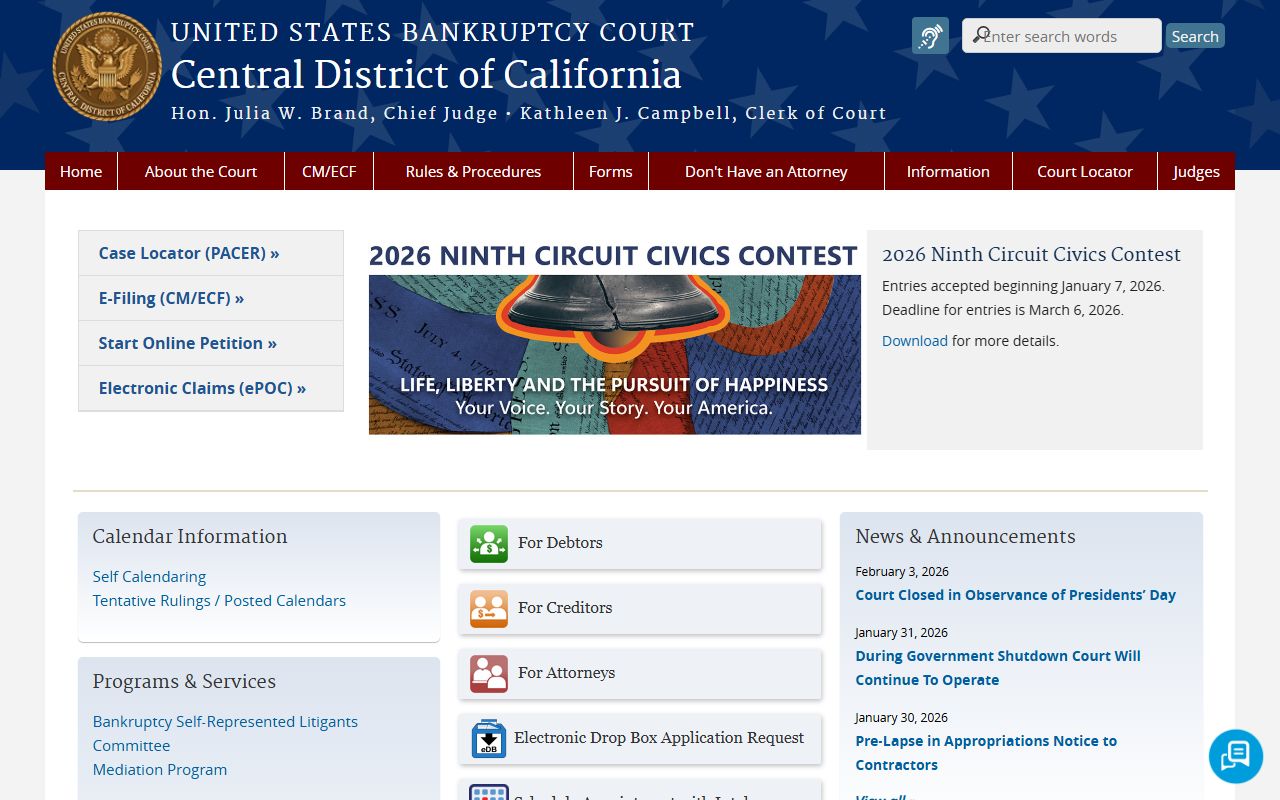
The court site has local rules, forms, and case lookup tools for Glendale filers.
Search Glendale Bankruptcy Records Online
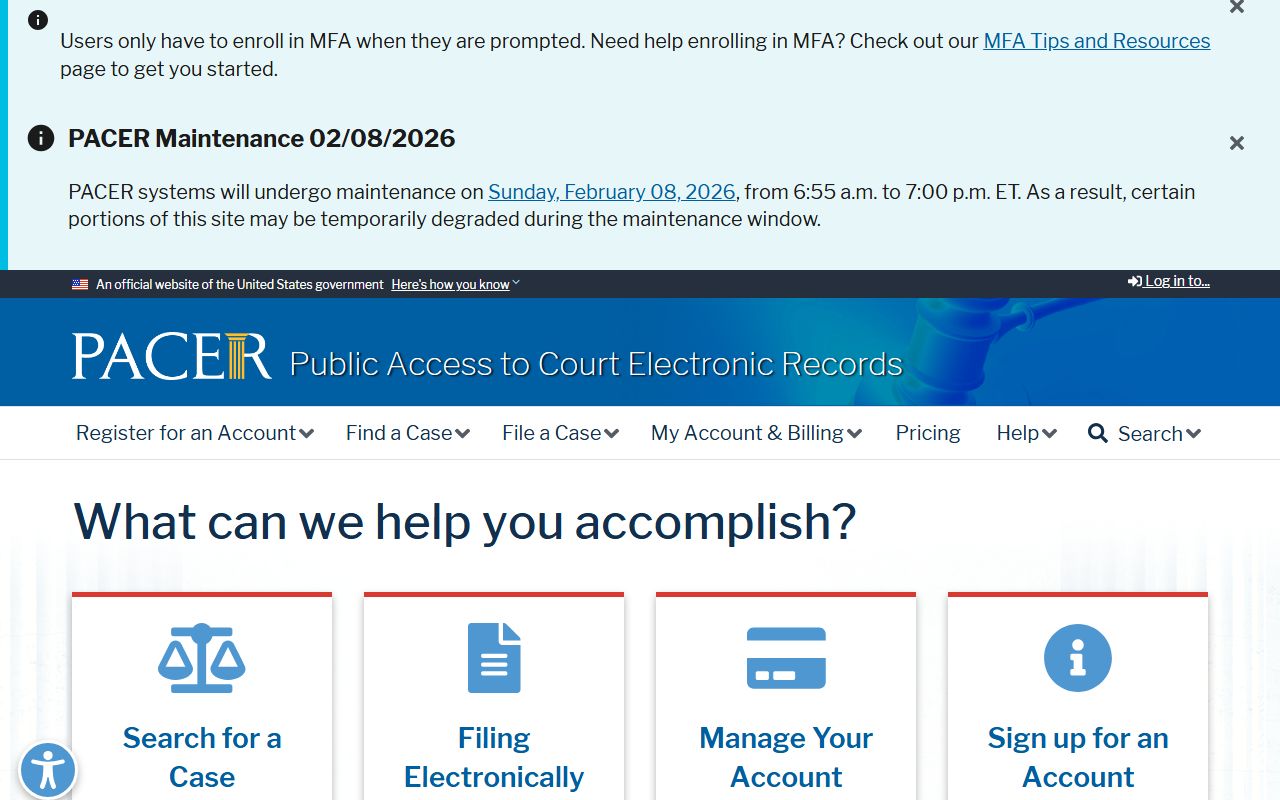
PACER gives you online access to federal court records. This includes all Glendale bankruptcy cases. The system works around the clock from any computer with internet.
Register at pacer.uscourts.gov for free. Log in and select the Central District of California. Enter a name or case number. Results show the chapter type, filing date, and case status. Click through to see dockets and documents. Charges are 10 cents per page, capped at $3 per document. Users under $30 per quarter pay nothing at all.
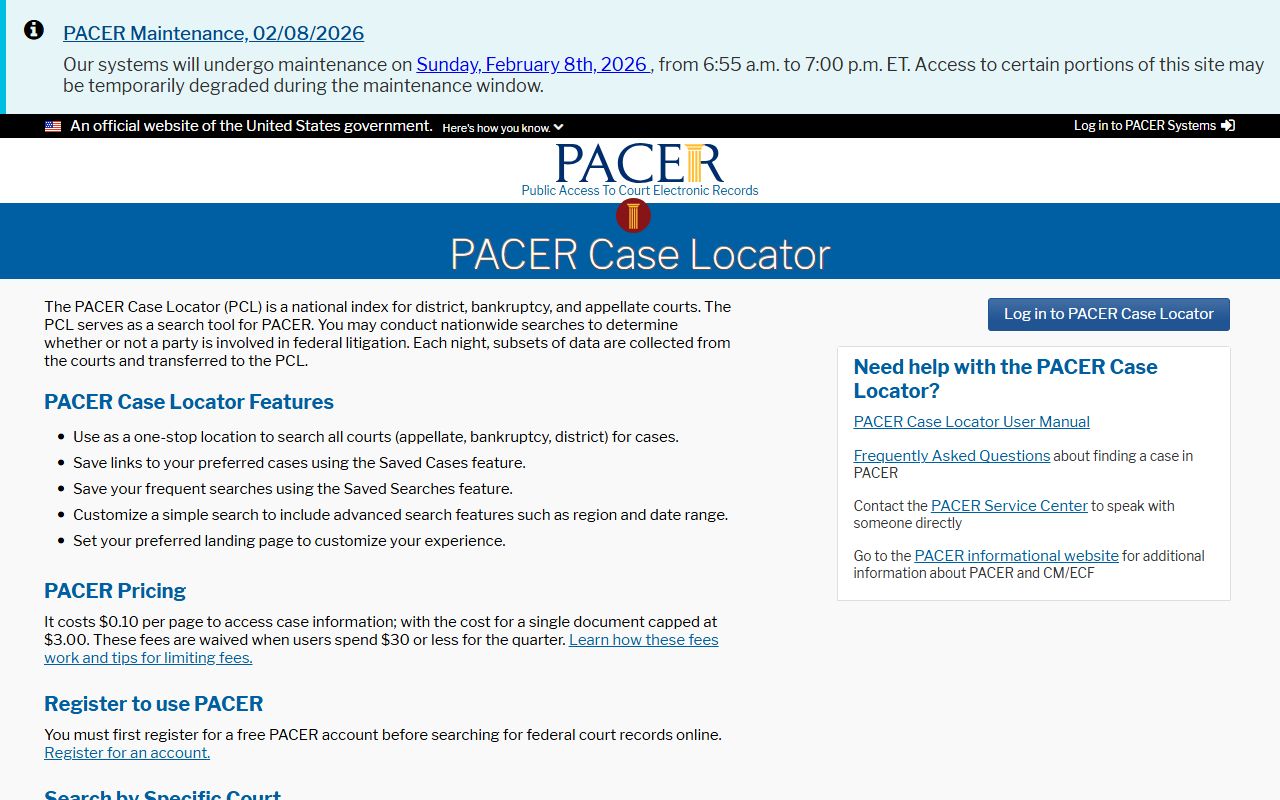
The PACER Case Locator is another useful tool. It searches every federal court at once. If someone moved before filing, this helps you find where the case landed. Glendale cases show under the Central District.
Free Ways to Find Glendale Bankruptcy Cases
Not all searches require payment. Glendale residents have free options.
The Voice Case Information System provides phone access 24/7. Dial (866) 222-8029. You can look up cases by number or party name. The automated system reads back case details like filing date, chapter, and status. This works for quick checks and costs nothing.
Visit the courthouse in person. Public terminals are free to use during business hours. Staff can help you navigate the system. You can view full case files on screen without charge. Printing costs a small fee per page. This option suits those who need to review many documents without running up PACER costs.
Fee waivers exist for certain users. Low income individuals can apply. Nonprofits and researchers may also qualify. Ask the clerk's office about waiving fees for Glendale bankruptcy record access.
Note: Basic case info is always free through VCIS phone service.
Types of Glendale Bankruptcy Filings
Glendale residents file under three main bankruptcy chapters. Each type creates different records in the court database.
Chapter 7 is the most common option. It wipes out most debts through liquidation. California's exemptions let most filers keep their property. The process takes about four months. Records include the petition, schedules of assets and debts, and the discharge order. Chapter 7 makes up about 78% of all California filings. Many Glendale residents use this chapter to get a fresh start.
Chapter 13 works for those with regular income. It sets up a three to five year repayment plan. The court monitors payments throughout the case. Records grow over time to include the plan, payment history, and completion documents. Glendale homeowners often pick Chapter 13 to stop foreclosure while catching up on missed payments.
Chapter 11 handles business reorganization. It is complex and creates extensive records. Few Glendale residents use this option. When they do, the files can span hundreds of documents over months or years. Small business owners may file Chapter 11 to restructure debts without closing down.
Documents in Glendale Bankruptcy Records
Bankruptcy files follow a standard structure. Knowing what each document contains helps you find what you need.
The voluntary petition opens every case. It lists the debtor's name, address, and chosen chapter. Schedules A through J detail the financial picture. Schedule A/B covers assets. Schedule D lists secured debts like car loans. Schedule E/F shows unsecured debts. Schedule I reports income. Schedule J lists monthly expenses. The means test determines Chapter 7 eligibility.
The Statement of Financial Affairs covers recent financial history. It asks about property transfers, lawsuits, and prior bankruptcies. Creditors use this form to look for problems. The trustee reviews it too. Both documents appear early in Glendale bankruptcy records.
Later filings add to the record. Trustee reports summarize meetings. Motions ask the court for action. Orders grant or deny those requests. The discharge order ends most cases by releasing the debtor from certain obligations.
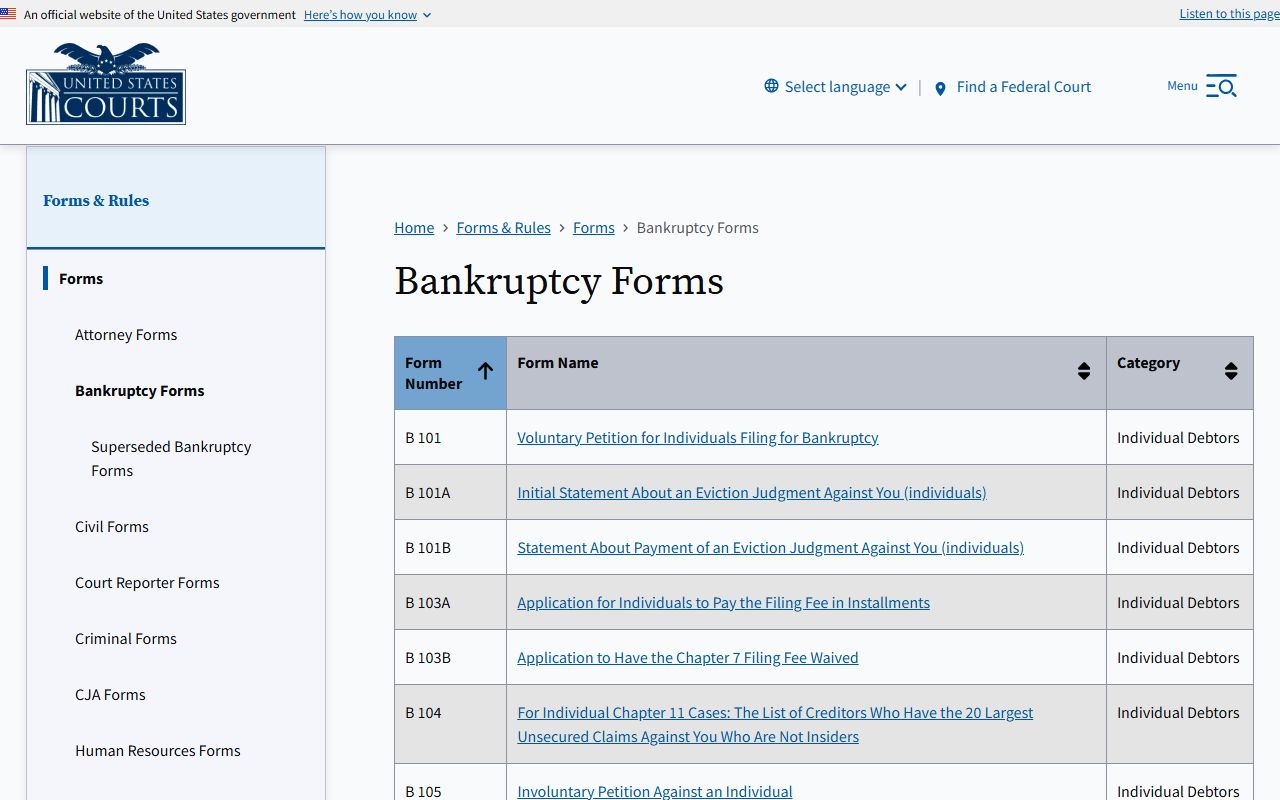
Download blank forms at uscourts.gov to understand what Glendale records contain.
California Exemptions Affecting Glendale Cases
California lets filers choose between two exemption systems. Glendale residents must pick one. The choice appears in their bankruptcy schedules.
System 1 protects homeowners. It shields up to $722,507 in home equity. Los Angeles County home values make this important for Glendale residents. The exact amount ties to median home prices. This system also covers vehicles up to $8,625, work tools up to $10,950, and unlimited retirement accounts. No wildcard is available under System 1.
System 2 offers a wildcard option. The homestead drops to $36,750. But unused homestead converts to wildcard funds, up to $38,700 total. This protects any type of property. Renters in Glendale often prefer System 2. The flexibility lets them shield cars, bank accounts, or other valuable items.
Studying exemption choices in past Glendale bankruptcy records shows local patterns. Lawyers look at these trends when planning cases.
Electronic Filing for Glendale Cases
Lawyers use CM/ECF to file documents. The Central District CM/ECF handles all Glendale filings. Registration is required for attorneys. Pro se filers may need to file on paper or get special permission.
PACER users view what CM/ECF filers upload. The systems share data. When you search PACER for Glendale records, you see everything filed through CM/ECF. One PACER login works for viewing across all federal courts.
Nearby Los Angeles County Cities
Other cities in Los Angeles County share the same bankruptcy court. Records for all these areas are in one database.