
Long Beach Bankruptcy Records
Long Beach bankruptcy records are maintained by the U.S. Bankruptcy Court for the Central District of California. As the seventh largest city in California with over 450,000 residents, Long Beach generates substantial bankruptcy filings each year. The court keeps records for all chapter types, including Chapter 7, Chapter 13, and Chapter 11 cases. Public access is available through PACER online and at the Los Angeles courthouse. This guide explains how to search, what documents you will find, and your options for free access to Long Beach bankruptcy filings.
Long Beach Quick Facts
Long Beach Bankruptcy Court Location
Long Beach is part of Los Angeles County. The Central District of California Bankruptcy Court handles all federal bankruptcy filings for this area. This is the busiest bankruptcy court in the nation, processing more cases than any other.
The main courthouse sits at 255 E. Temple Street, Los Angeles, CA 90012. Call (213) 894-3118 for the clerk's office. Hours run from 9 AM to 4 PM on weekdays. The drive from Long Beach takes about 30 minutes depending on traffic. Free public terminals at the courthouse let you search records in person.
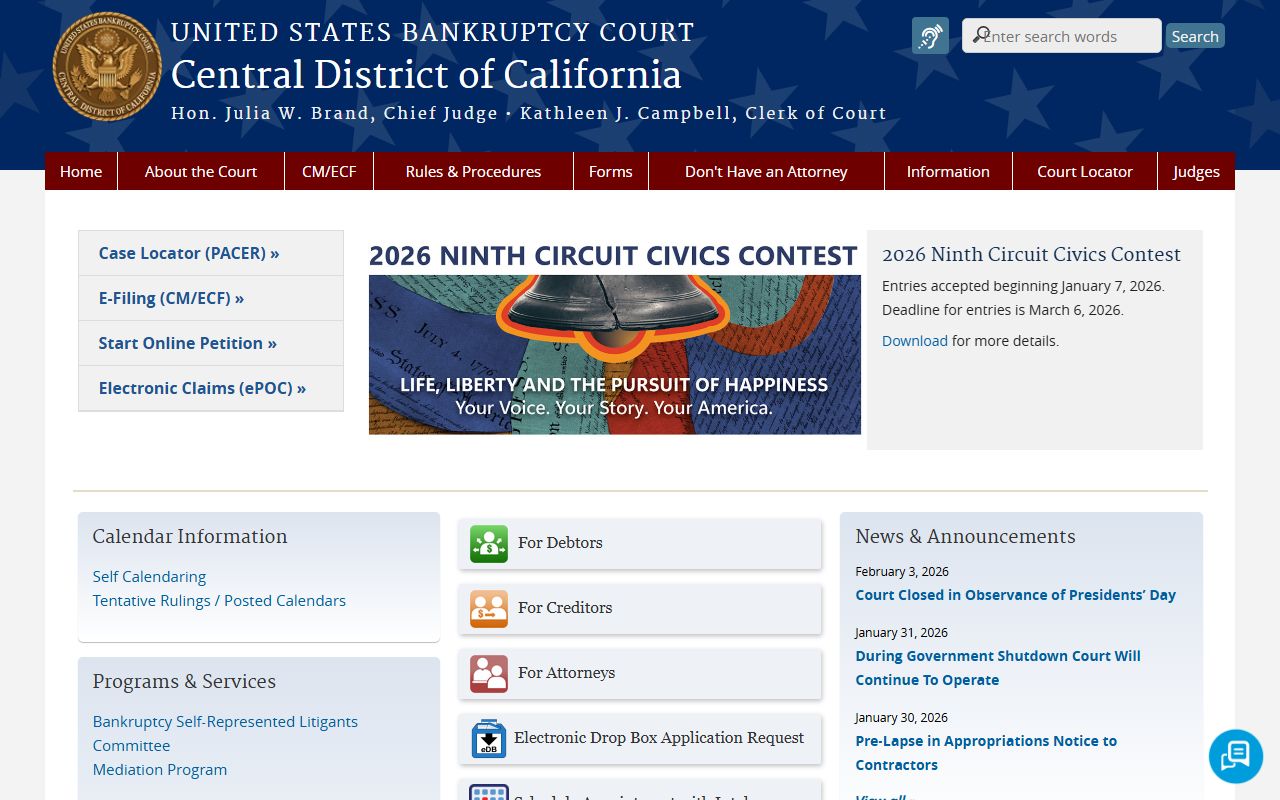
The court website lists local rules, forms, and filing resources for Long Beach residents.
Search Long Beach Bankruptcy Records Online
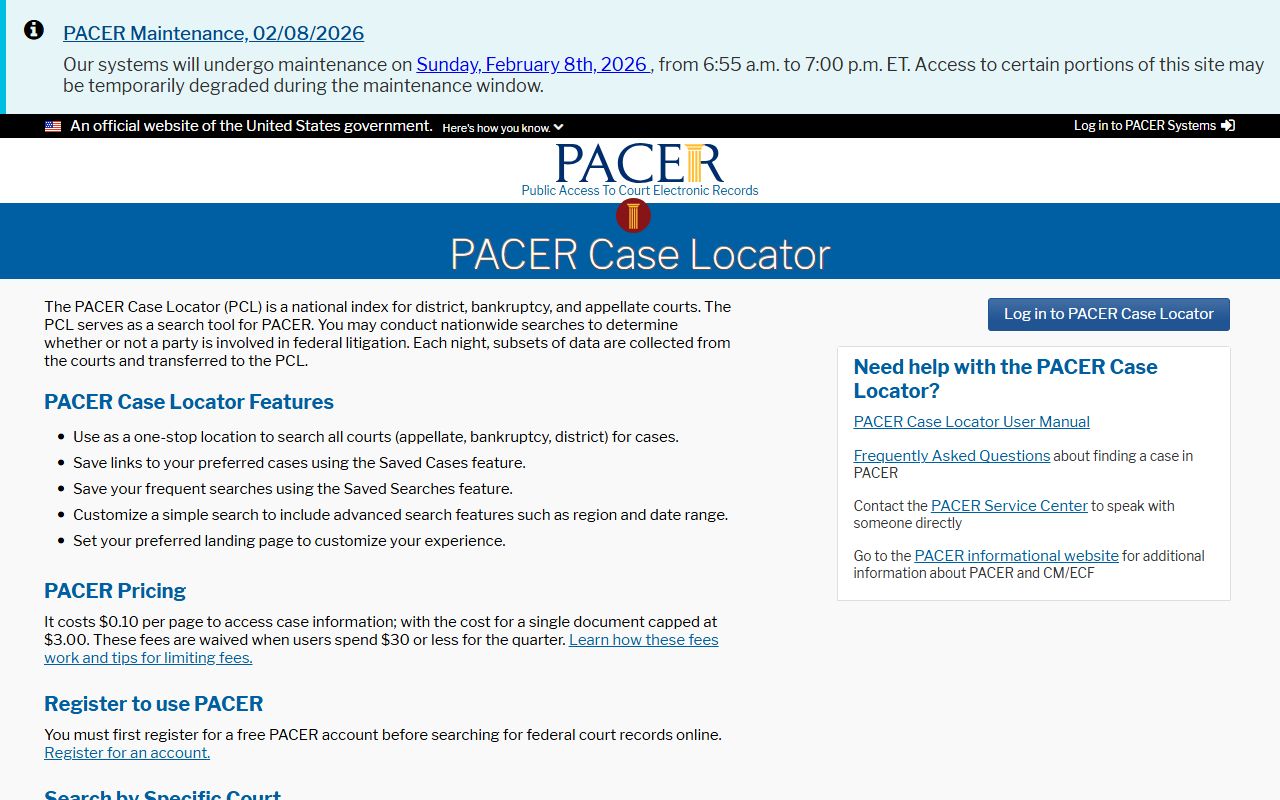
PACER provides online access to all federal court records. This includes every bankruptcy filing from Long Beach. The system runs 24 hours a day, 7 days a week.
Sign up for free at pacer.uscourts.gov. Once logged in, pick the Central District of California. Enter a name or case number. Results display filing date, chapter type, and case status. View dockets and download documents from there. Costs are 10 cents per page with a $3 cap per document. Users under $30 per quarter pay nothing at all. This makes PACER free for most searchers looking at Long Beach bankruptcy records.
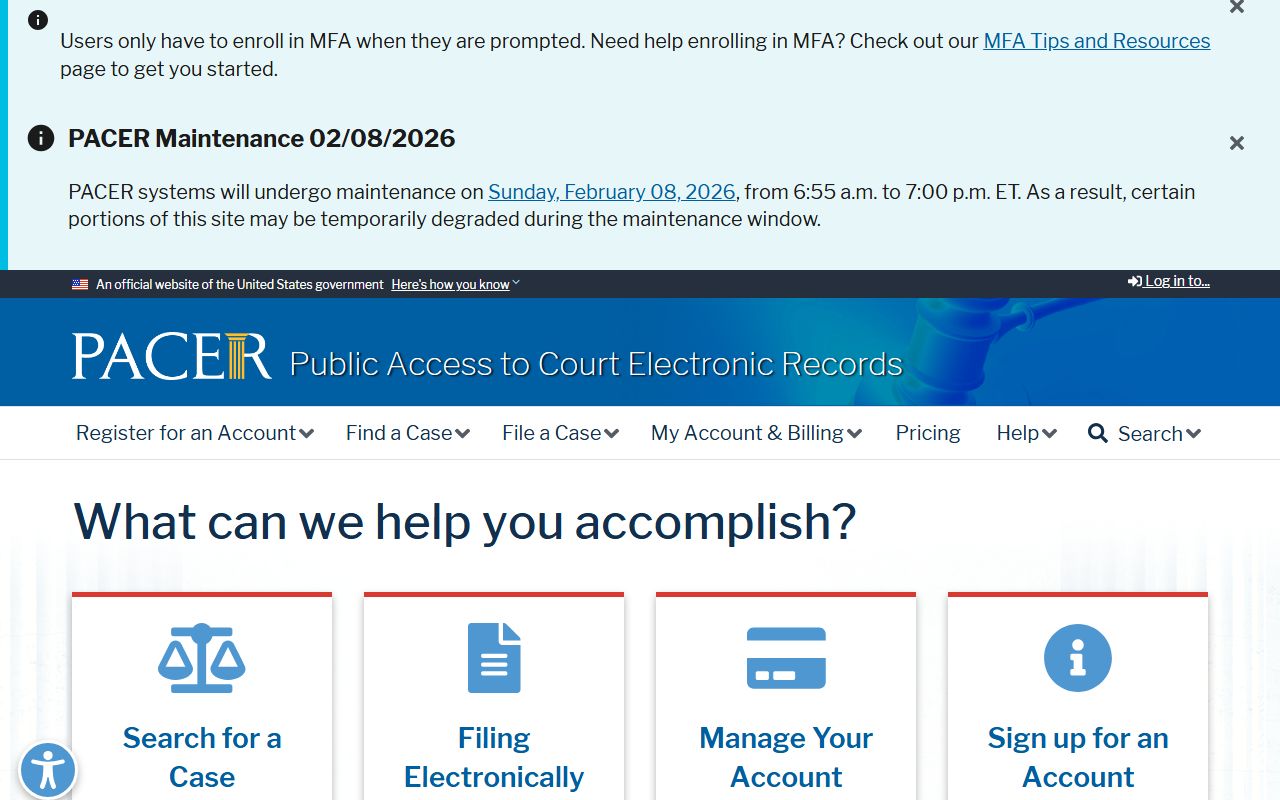
The PACER Case Locator searches every federal court at once. Use it when you do not know which district has a case. Long Beach filings appear under the Central District of California.
Free Ways to Access Long Beach Cases
Multiple free options exist for Long Beach residents searching bankruptcy records.
The Voice Case Information System runs around the clock. Call (866) 222-8029 to search by phone. Enter a case number or party name. The automated system reads back basic details including filing date, chapter type, and status. This works for quick checks on Long Beach cases at no cost.
Public terminals at the Los Angeles courthouse are free. Walk in during business hours. Staff help visitors navigate the system. View documents on screen without charge. Only printing costs a small fee per page. This option suits those who need to review many documents.
Fee waivers apply for some users. Low income individuals can request one. Nonprofits and academic researchers might also qualify. Contact the clerk's office to ask about waivers for Long Beach bankruptcy searches.
Bankruptcy Types Filed in Long Beach
Long Beach residents file under three main chapters. Each generates different types of records.
Chapter 7 is the most common. It eliminates debts through liquidation. California exemptions let most filers keep their belongings. Cases wrap up in about four months. Records include the petition, schedules of assets and debts, and the discharge order. Chapter 7 makes up about 78% of California bankruptcies. Many Long Beach residents choose this option for a fresh start.
Chapter 13 suits those with steady income. It creates a repayment plan spanning three to five years. Records expand as the case proceeds. They include the plan, payment history, and completion documents. Long Beach homeowners use Chapter 13 to save their homes while catching up on mortgage payments. This chapter also helps with car loans and tax debts.
Chapter 11 handles business reorganization. Long Beach has an active business community, so some local companies file under this chapter. It generates extensive records over months or years. Small businesses and individuals with high debts may use Chapter 11 to restructure while staying open.
Note: All chapter types create public records that anyone can search.
What Long Beach Bankruptcy Files Contain
Bankruptcy files follow a standard structure. Understanding the documents helps you search more effectively.
The voluntary petition starts every case. It lists the debtor's name, address, and chapter choice. Schedules A through J detail the financial picture. Schedule A/B covers property. Schedule D lists secured debts like mortgages. Schedule E/F shows unsecured obligations like credit cards. Schedule I reports income. Schedule J breaks down monthly expenses. The means test determines Chapter 7 eligibility.
The Statement of Financial Affairs covers recent transactions. It asks about property transfers, lawsuits, and prior bankruptcies. Trustees review this form closely for any issues that might affect the case.
More documents pile up over time. Trustee reports come after the meeting of creditors. Motions request court action on specific issues. Orders respond to those motions. The discharge order ends most cases. It releases the debtor from qualifying debts and matters most for background checks and credit reviews.
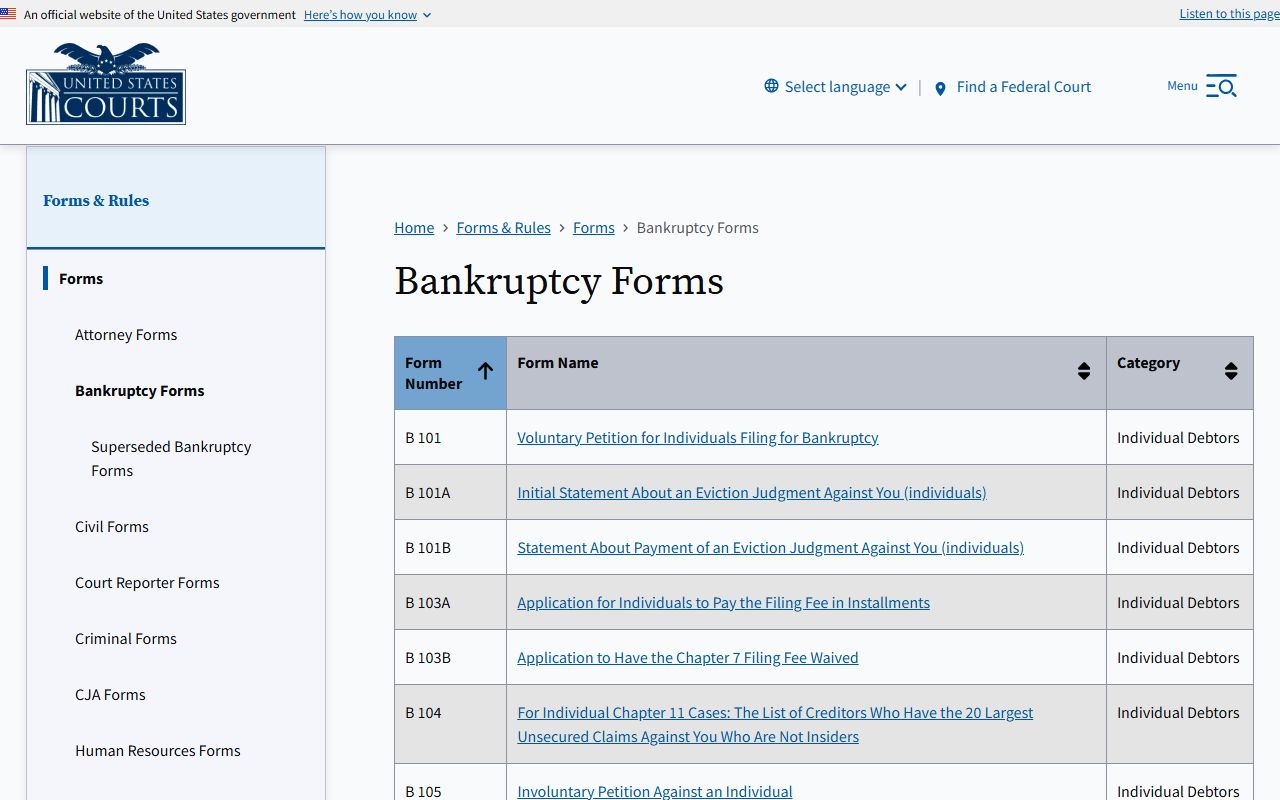
Download blank forms at uscourts.gov to see what Long Beach records contain.
California Exemptions for Long Beach Filers
California provides two exemption systems. Long Beach residents must pick one when filing. The choice shows up in the bankruptcy schedules.
System 1 works best for homeowners. It shields up to $722,507 in home equity. Los Angeles County property values make this crucial for Long Beach homeowners. The exact amount depends on median home prices in the county. System 1 also covers vehicles up to $8,625, work tools up to $10,950, and unlimited retirement accounts. No wildcard is available under this option.
System 2 suits renters better. The homestead drops to $36,750. But a wildcard exemption of up to $38,700 can protect any property. Long Beach renters often favor this system. The wildcard lets them shield cars, bank accounts, investment accounts, or other assets that matter to them.
Reviewing exemption choices in past Long Beach bankruptcy records reveals local patterns. Attorneys study these trends when advising new clients on which system to use.
Electronic Filing for Long Beach Cases
Attorneys file documents through CM/ECF. The Central District CM/ECF system processes all Long Beach filings. Lawyers must register separately to use this tool.
PACER connects to CM/ECF. When you search PACER for Long Beach records, you see what attorneys uploaded electronically. One PACER account works for viewing records from all federal courts nationwide.
Nearby Los Angeles County Cities
Other Gateway Cities and South Bay cities share the same bankruptcy court. Their records are in one database with Long Beach filings.